property details
Address – 12601 River Rd, Richmond, VA 23238
Built in – 1733
Price – $17,000,000
Beds – 5
Baths – 6
Living Area – 6,480 sqft
Lot Size – 557 Acres Lot
Property Type – Single Family Residence
Introduction
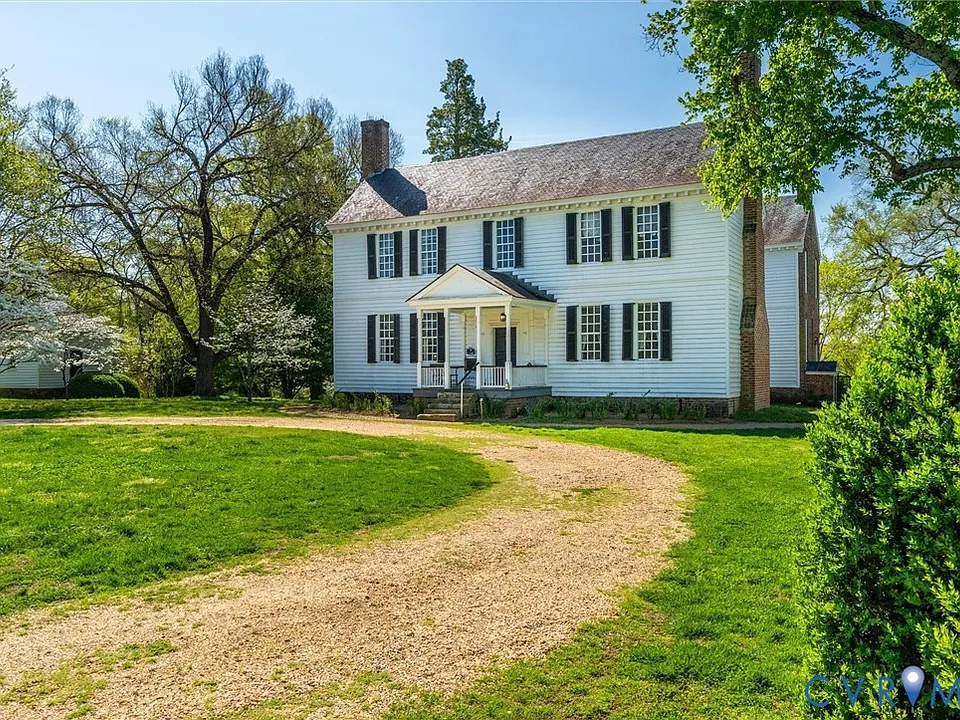
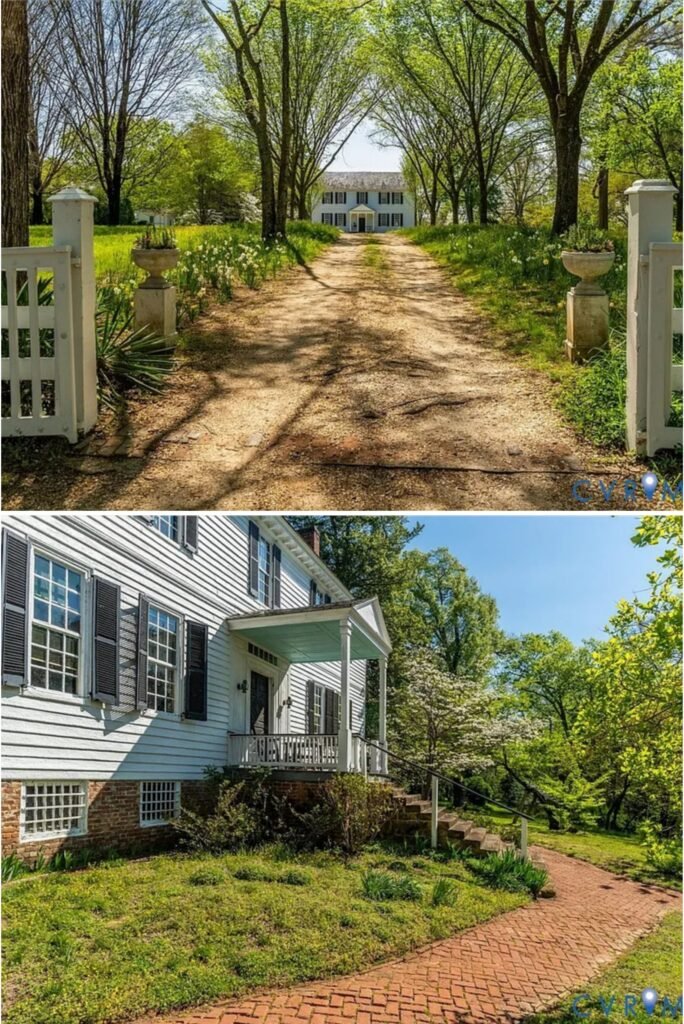
Set across 557 acres beside the James River, Historic Tuckahoe is far more than an old Virginia mansion with a famous name attached. The 6,480-square-foot residence began taking shape around 1733 for the prominent Randolph family and later evolved into its remarkable H-shaped form—essentially two houses connected by a grand central saloon. Formal gardens, open farmland and a rare collection of early outbuildings, including a kitchen, smokehouse, surviving slave quarters and a one-room schoolhouse, make Tuckahoe feel like an entire colonial landscape preserved through time.
The estate is best known as the boyhood home of Thomas Jefferson, who lived here with his family for several formative years beginning in the mid-1740s. In the small schoolhouse that still stands on the grounds, the future author of the Declaration of Independence received some of his earliest formal education. Designated a National Historic Landmark in 1969, Tuckahoe is celebrated for its beautifully preserved architecture, yet its story also reflects the tobacco wealth and enslaved labor on which Virginia’s plantation society was built. Few American properties bring together architecture, landscape and national history on quite this scale.
history
The story of Tuckahoe begins in 1695, when William Randolph of Turkey Island secured a patent for land along the James River. His son, Thomas Randolph, had settled the property by 1714, but the mansion standing today was developed by the next generation. Construction began around 1733 under William Randolph and his wife, Maria Judith Page. Built in stages, the house eventually took on its unusual H-shaped form, with two substantial wings joined by a central saloon. The surrounding kitchen, smokehouse, storehouse, office and quarters were arranged along what became known as “Plantation Street.”
A major turning point came in 1745, when William and Maria Randolph died, leaving behind three young children. William’s will named his close friend Peter Jefferson as their guardian and requested that the Jefferson family move to Tuckahoe. Peter arrived with his wife, Jane Randolph Jefferson, and their children, including two-year-old Thomas Jefferson. The future president spent roughly seven formative years here and received some of his earliest lessons in the small one-room schoolhouse that still survives on the property.
Tuckahoe’s prosperity came largely from tobacco and other agricultural operations supported by the forced labor of enslaved African Americans. Estate and tax records preserve the names of many of these men, women and children, who worked in the fields, inside the mansion and in skilled trades. Surviving quarters along Plantation Street provide an unusually tangible connection to their lives. Records from the late eighteenth century list close to 200 enslaved people connected to Colonel Thomas Mann Randolph’s holdings, although not all necessarily lived at Tuckahoe.
The estate remained with the Randolph family until financial difficulties forced its sale around 1830. It was purchased by Hezekiah Lord Wight and later inherited by his son, Edwin. Although several enslaved people were freed under the Wights’ wills, dozens remained in bondage at Tuckahoe. Joseph Allen acquired the property around 1850, and the Allen family continued its agricultural operations through the Civil War era. Following emancipation, some formerly enslaved families remained in the surrounding Goochland community and continued working on the estate as paid employees.
Around the beginning of the twentieth century, Tuckahoe was purchased by the Coolidge family, relatives of the Randolphs. In 1935, philanthropist Jessie Ball duPont acquired the estate as a gift for her sister, Isabelle Ball Baker. The Baker-Thompson family and their descendants have cared for the property ever since, placing preservation easements over the house, its historic buildings and the surrounding landscape.
Tuckahoe was entered in the Virginia Landmarks Register and the National Register of Historic Places in 1968, followed by its designation as a National Historic Landmark in 1969. Today, it survives not only as Thomas Jefferson’s boyhood home, but also as one of America’s most complete colonial plantation landscapes—a place shaped by the Randolph family, generations of later owners and the many enslaved people whose labor sustained it.
Key Historical Points
1969 — The estate received National Historic Landmark status.
1695 — William Randolph of Turkey Island obtained a patent for the land that became Tuckahoe.
1714 — His son, Thomas Randolph, had settled on the property.
1733 — The Virginia Department of Historic Resources entry for Tuckahoe dates the north wing to 1733 and explains the house’s development. Its history should be read alongside the surviving outbuildings and the lives of the enslaved people whose work supported the plantation.
1745–1752 — Peter Jefferson’s family lived at Tuckahoe while caring for the orphaned Randolph children. Thomas Jefferson spent much of his early childhood and began his formal education here.
18th and 19th centuries — Tuckahoe operated as a large agricultural plantation dependent on enslaved labor.
Around 1830 — The estate passed from the Randolph family to Hezekiah Lord Wight.
Around 1850 — Joseph Allen acquired Tuckahoe and continued its farming operations.
1935 — Jessie Ball duPont purchased Tuckahoe for her sister, Isabelle Ball Baker.
1968 — Tuckahoe was listed in the Virginia Landmarks Register and National Register of Historic Places.
Architecture & Design
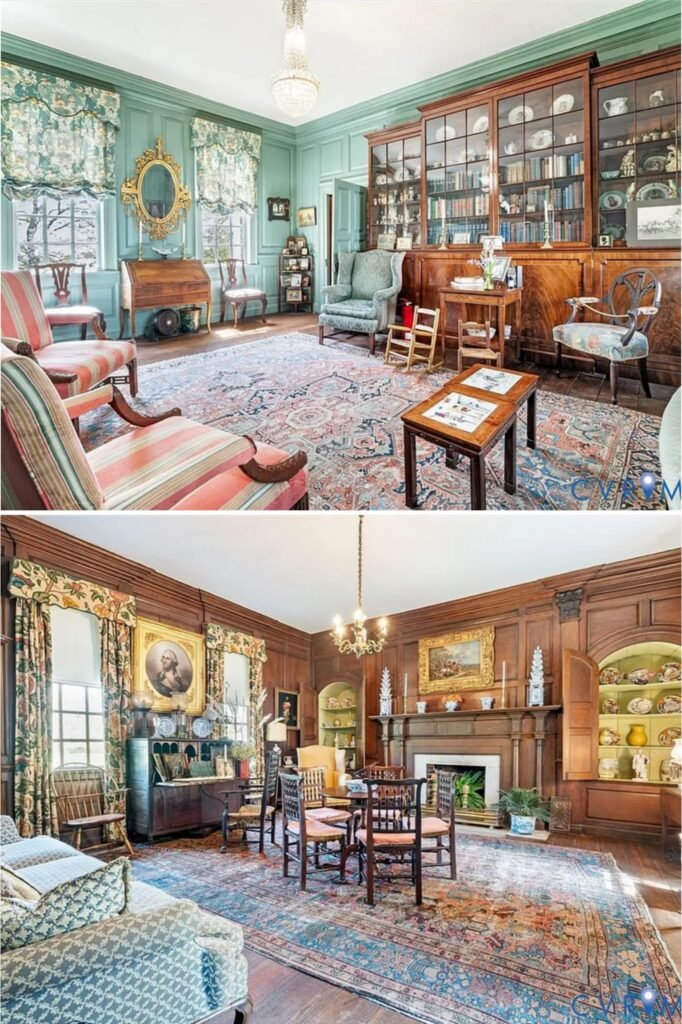
Tuckahoe is an exceptional example of colonial Virginia architecture, distinguished by an H-shaped plan that is unlike the conventional Georgian mansions of its period. The house was constructed in stages and functions almost like two separate residences joined together. One wing faces the entrance drive and was traditionally used for receiving guests, while the other looks toward the James River and provided more private rooms for the family. Between them is a tall central saloon that served as the architectural heart of the house and was occasionally used as a ballroom.
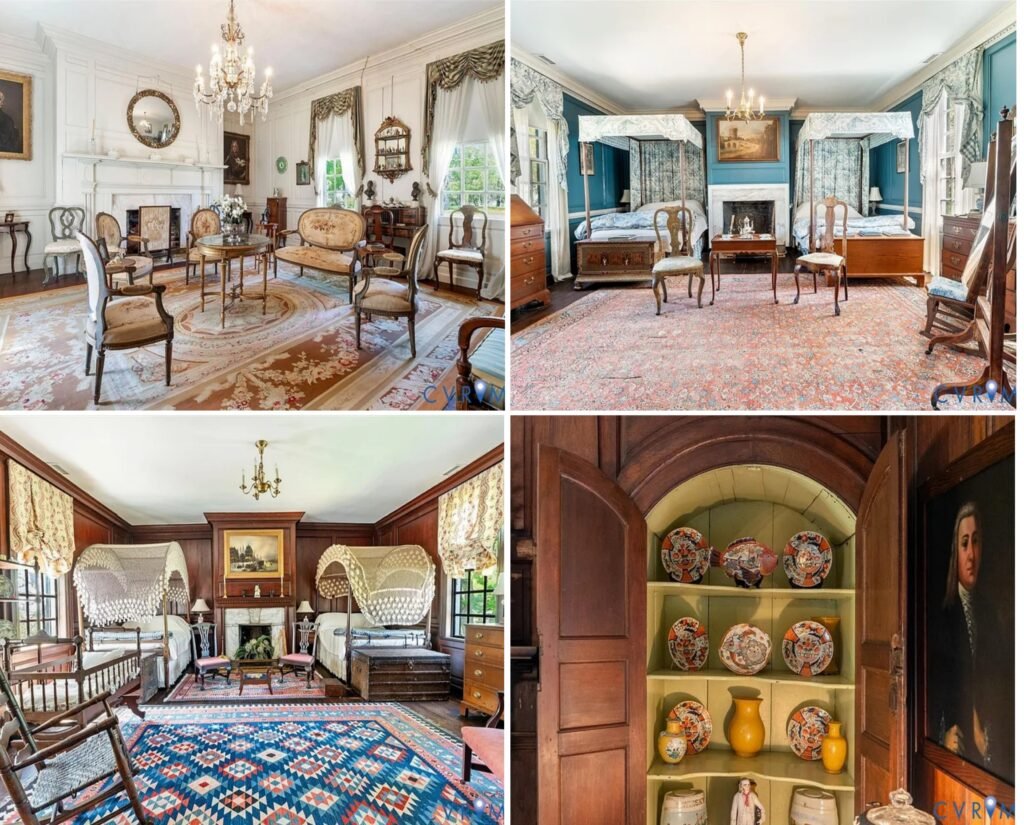
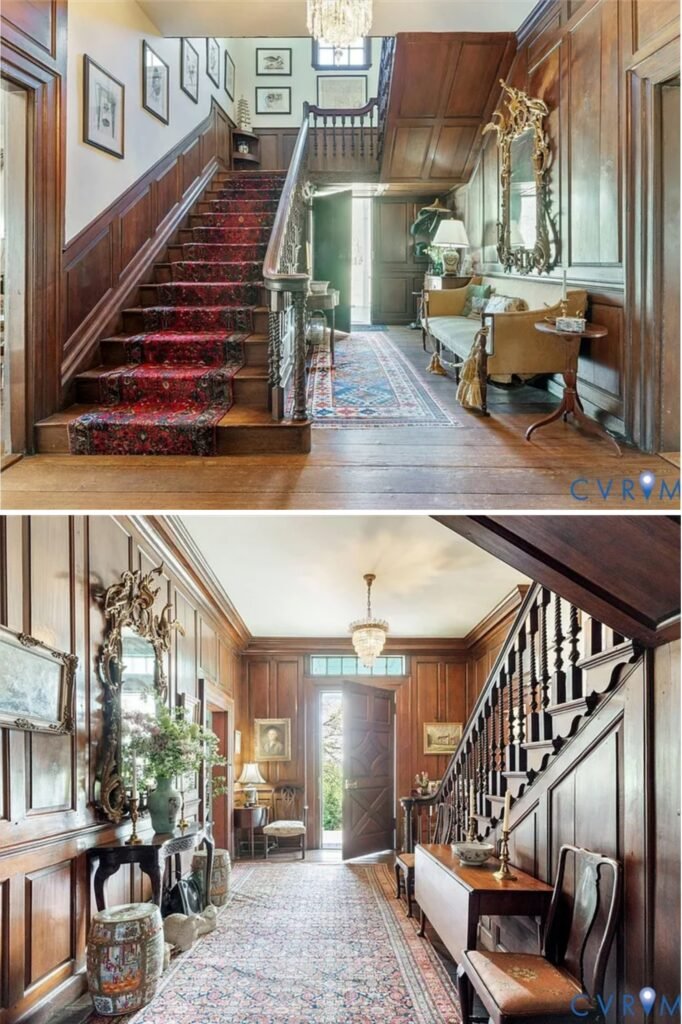
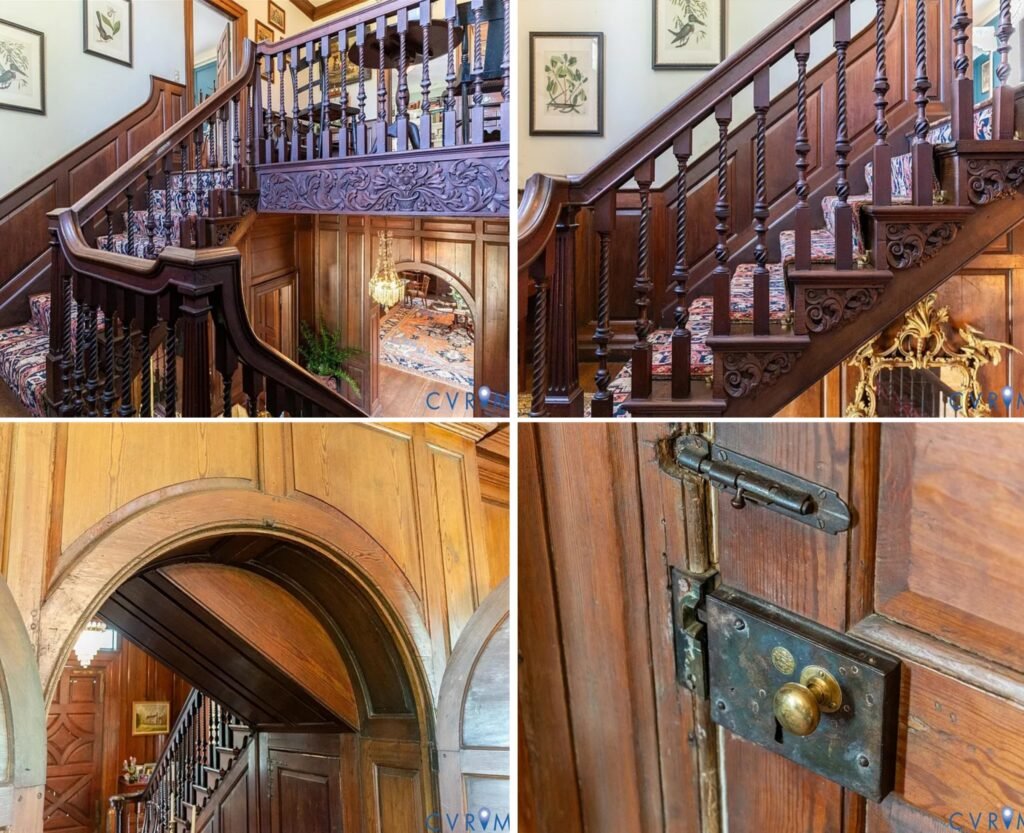
The timber-framed residence rests on a raised brick basement and combines weatherboarded walls with substantial brick end walls and chimneys. Its balanced five-bay façade is arranged around a modest pedimented entrance porch, with tall nine-over-nine sash windows bringing light into the principal rooms. A dentiled cornice beneath the roofline adds classical refinement without making the exterior feel overly formal. Inside, the house retains richly carved staircases, paneled walls, molded woodwork and carefully finished rooms that reflect the skill of eighteenth-century Virginia craftsmen.
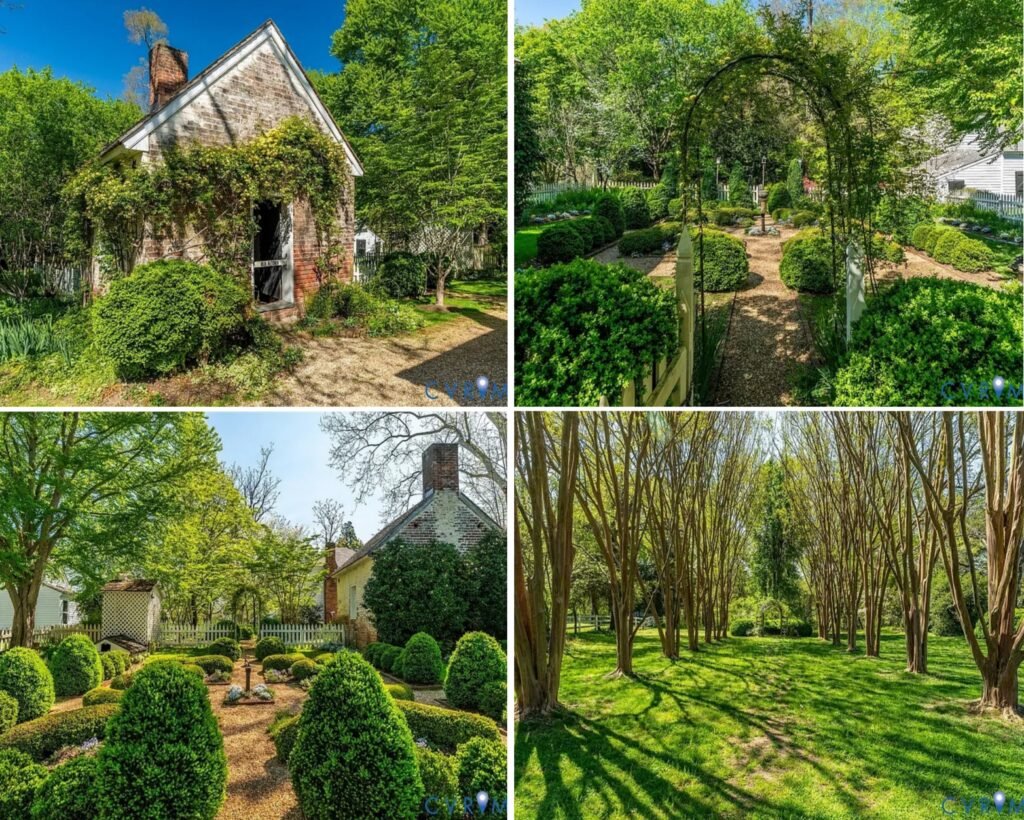
The design of Tuckahoe extends well beyond the mansion itself. A remarkable collection of surviving outbuildings is arranged along a straight path known as “Plantation Street.” This group includes the original kitchen, smokehouse, storehouse, office and quarters once occupied by enslaved people. Together with the gardens, mature trees, agricultural fields and views toward the James River, these buildings preserve the organization of an eighteenth-century plantation landscape with unusual clarity. It is the survival of this complete architectural setting—not merely the main house—that makes Tuckahoe one of the most important colonial properties in Virginia.
Location & Lifestyle
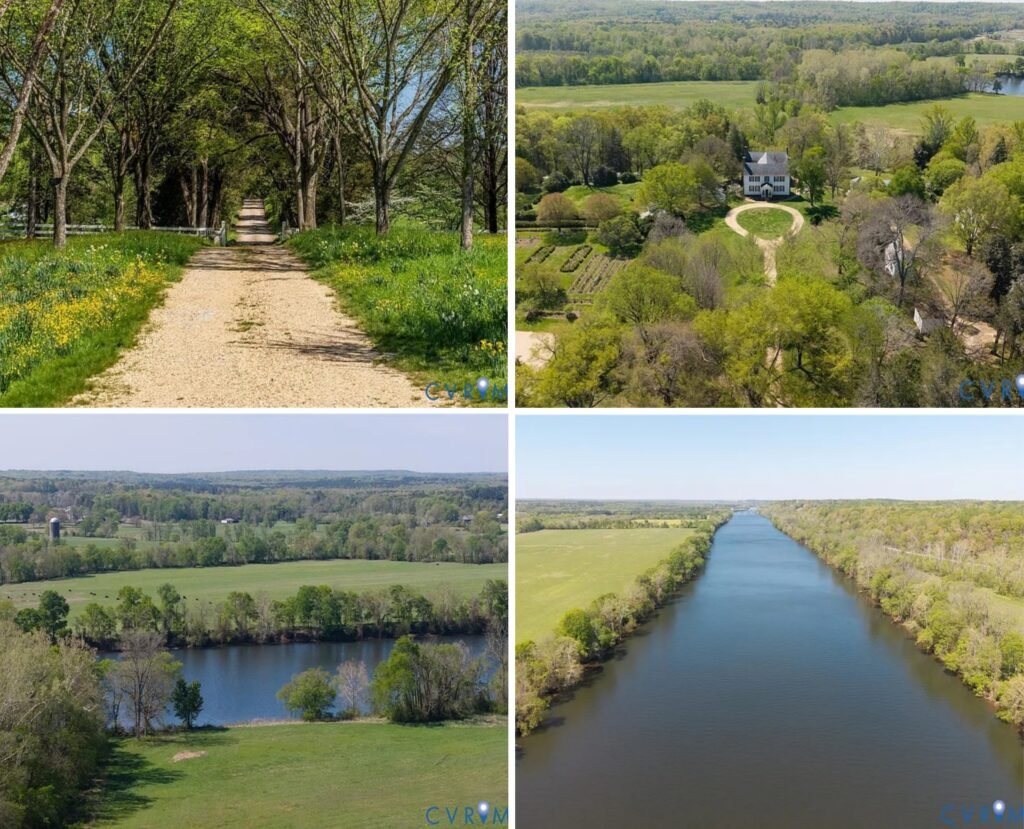
Although it carries a Richmond mailing address, Historic Tuckahoe is situated in eastern Goochland County near the Henrico County line, approximately 30 minutes west of downtown Richmond. Its setting along the James River offers a rare balance: the privacy and quiet of a great country estate without being isolated from the restaurants, cultural attractions and everyday conveniences of Virginia’s capital.
The property encompasses approximately 557 acres of formal lawns, mature woodland and agricultural fields that have remained in continuous use for centuries. A long approach through the historic landscape gradually reveals the mansion, gardens and collection of early outbuildings. Life here would unfold at a distinctly slower pace—walking through the grounds, tending the gardens, exploring woodland paths or simply watching the light change across the fields and river.
Tuckahoe, however, is not a conventional luxury country home. Much of the estate is protected by conservation and historic-preservation easements, helping ensure that its buildings, open land and river setting remain intact. Ownership would therefore carry both privilege and responsibility. The next resident would not simply be purchasing a private retreat near Richmond, but taking on the stewardship of a nationally important landscape that has survived for almost three centuries.
Editor’s Note
Tuckahoe would be extraordinary even without its connection to Thomas Jefferson. Its rare H-shaped mansion, surviving schoolhouse and remarkably complete group of eighteenth-century outbuildings give the estate a depth that few historic American properties can match. Yet its importance also lies in the more difficult stories preserved here—particularly those of the enslaved men, women and children whose labor sustained the plantation. This is not simply a grand house surrounded by beautiful land; it is an almost three-century-old record of American architecture, agriculture and social history. For the right owner, Tuckahoe offers something far more meaningful than luxury: the opportunity and responsibility to protect an irreplaceable piece of the nation’s past.
Related Homes
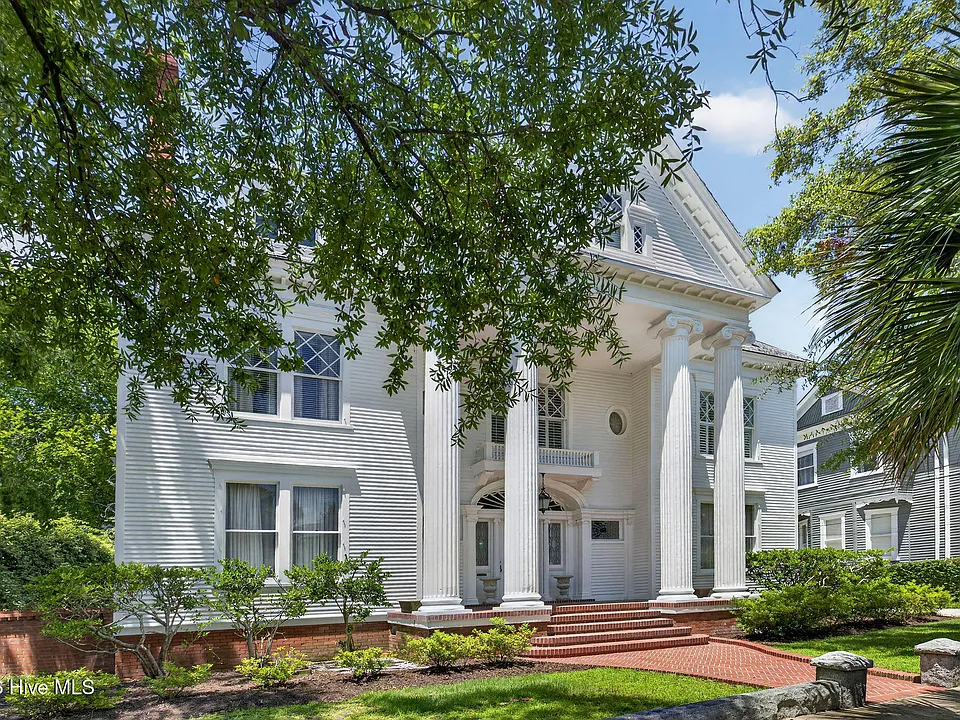
The 1900 William Dick House in Wilmington, NC
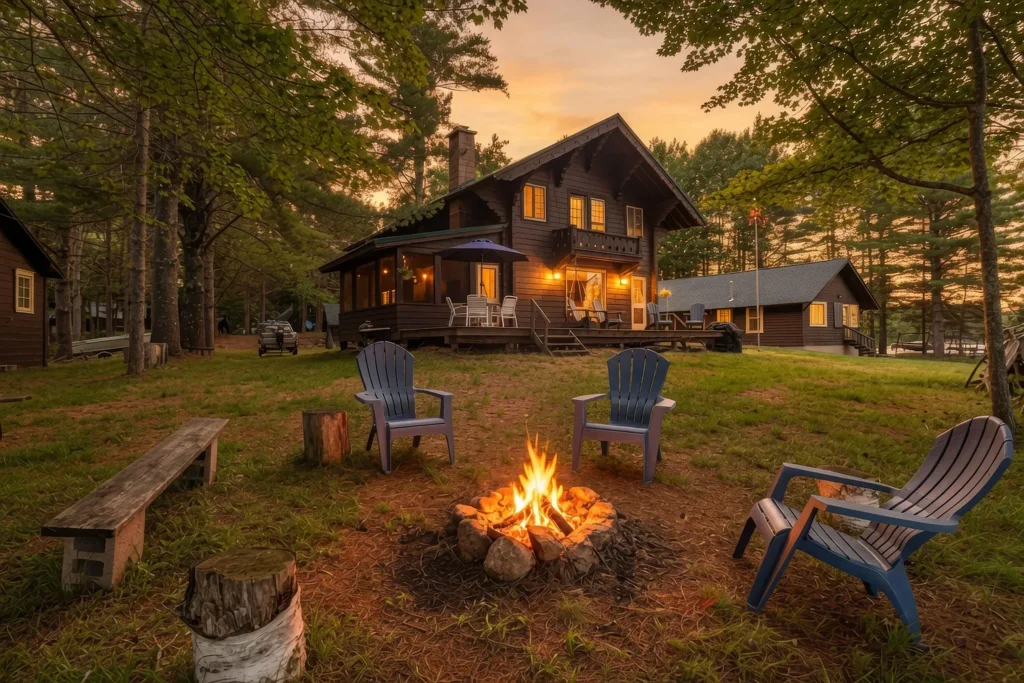
Swiss Chalet Retreat with 200 Feet of Raquette Lake Waterfront
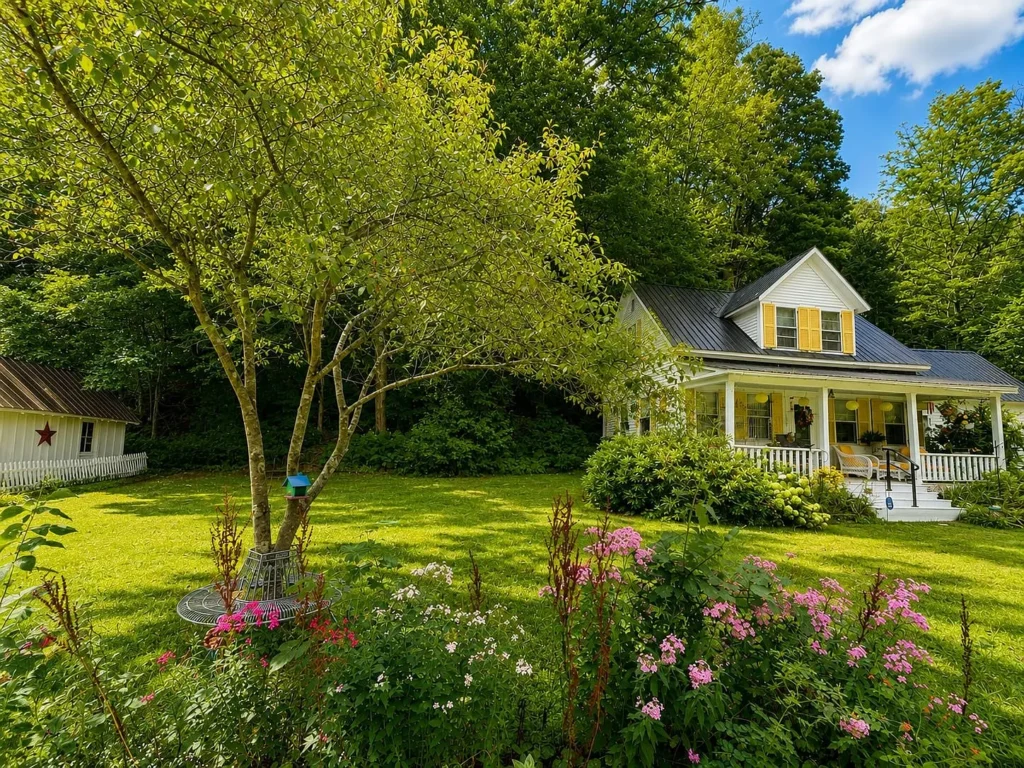
A Charming 1930 Vermont Home on the Rock River
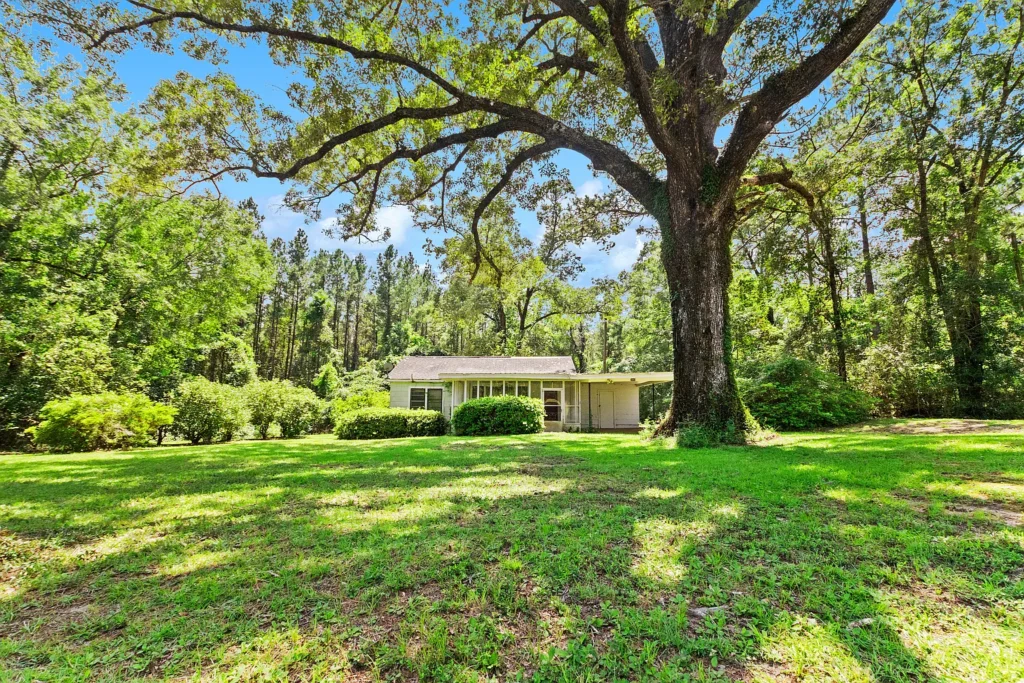
Storybook Cottage Beneath the Oaks
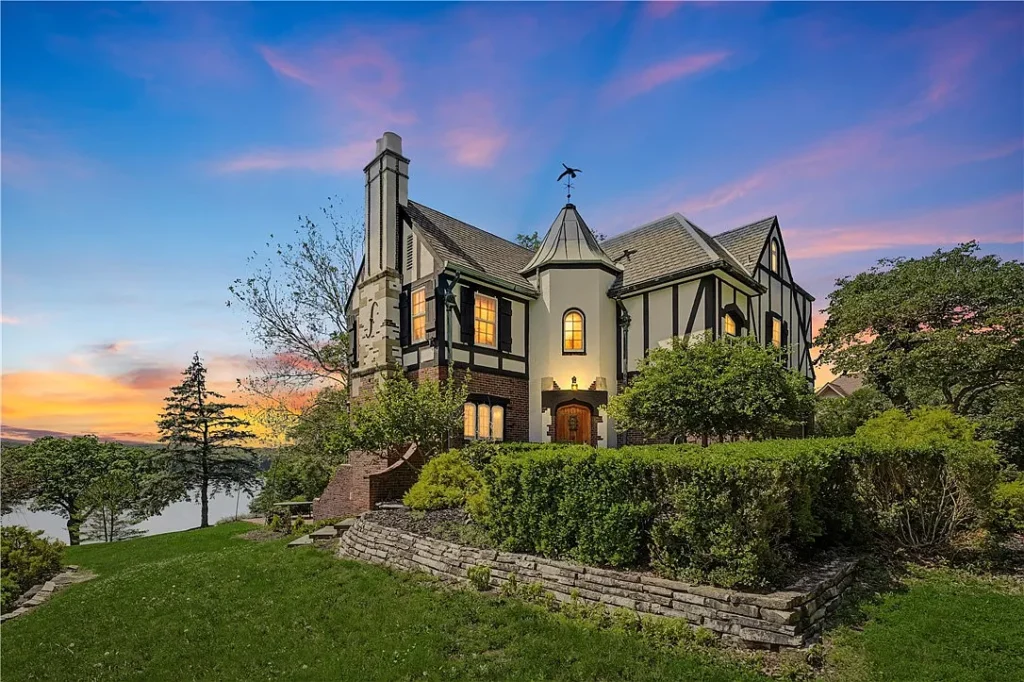
Tudor Elegance Above Lake Vermilion
Magnificent Montana Stone Chateau on 70 Acres
A Pirate Ship on Williams Lake: Idaho’s Remarkable Shipwreck House