property details
Address – 2915 NE Marine Dr Unit A16, Portland, OR 97211
Built in – 1940
Price – $85,000
Beds – 1
Baths – 1
Living Area – 720 sqft
Property Type – Residential
Introduction
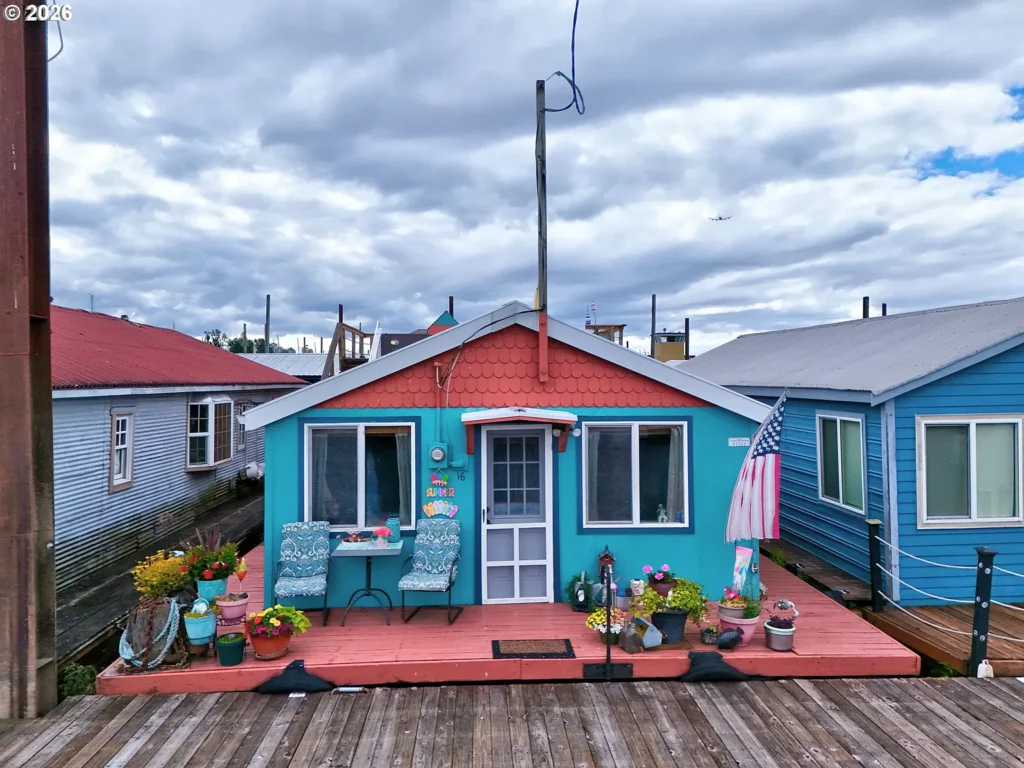
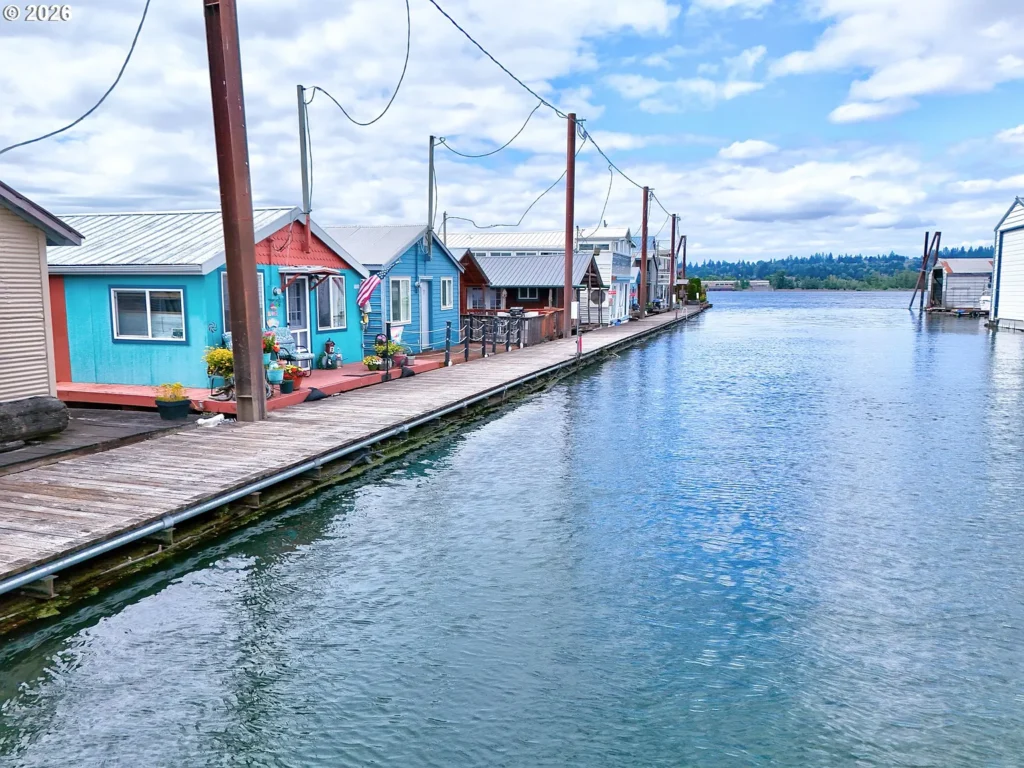
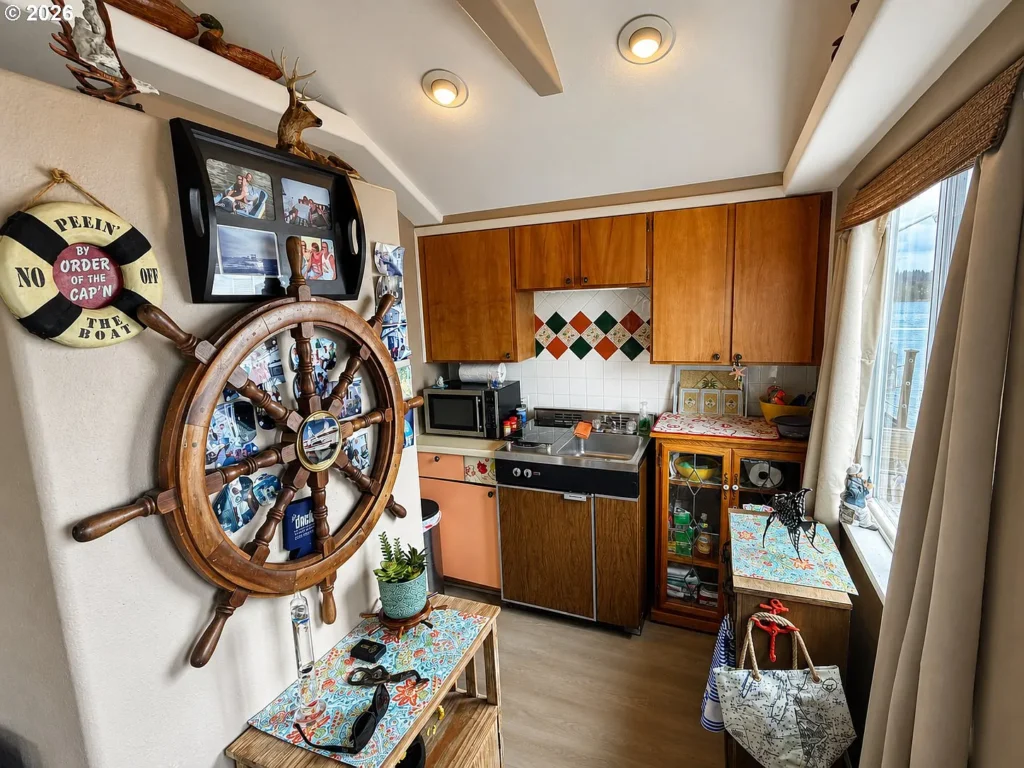
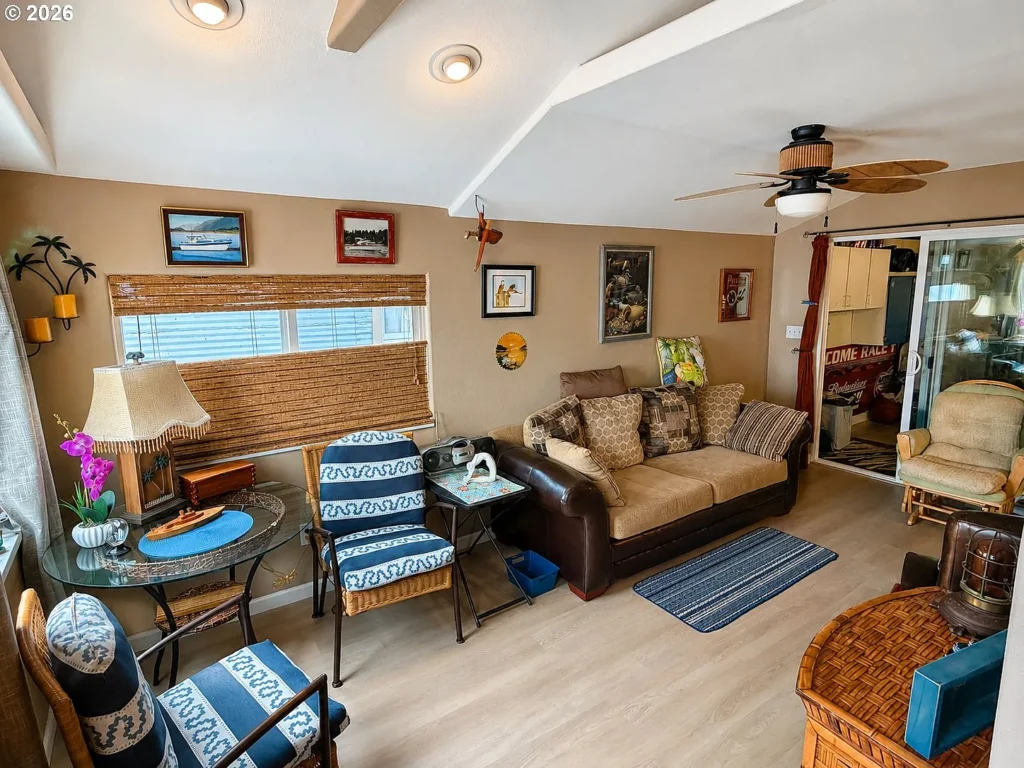
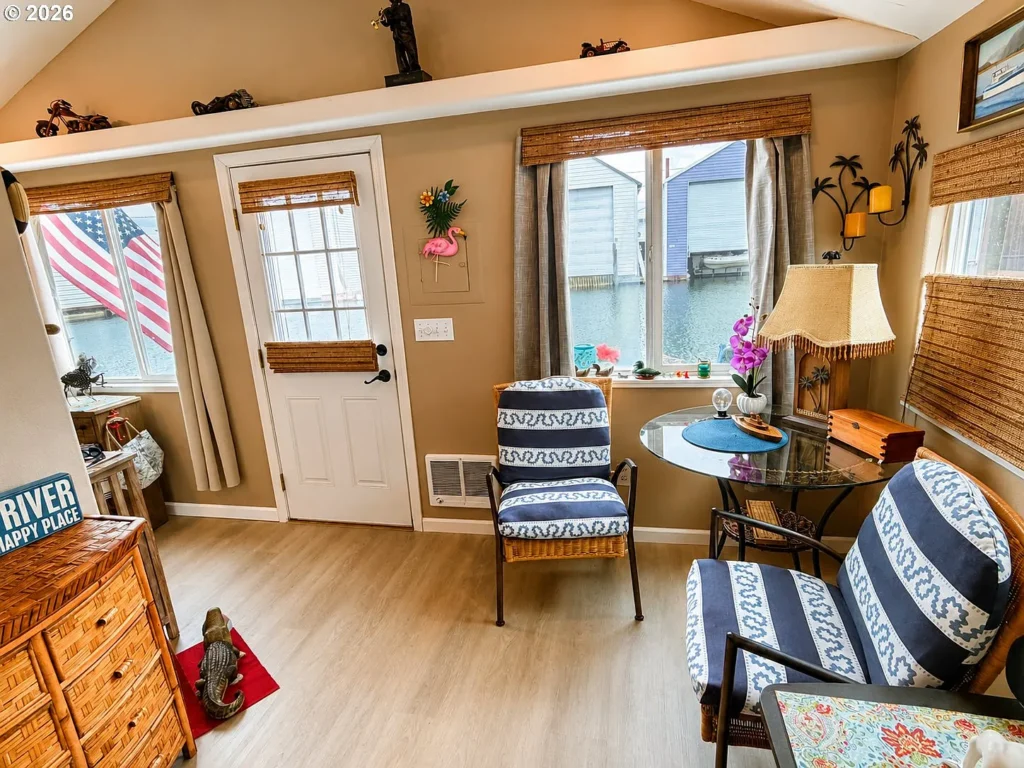
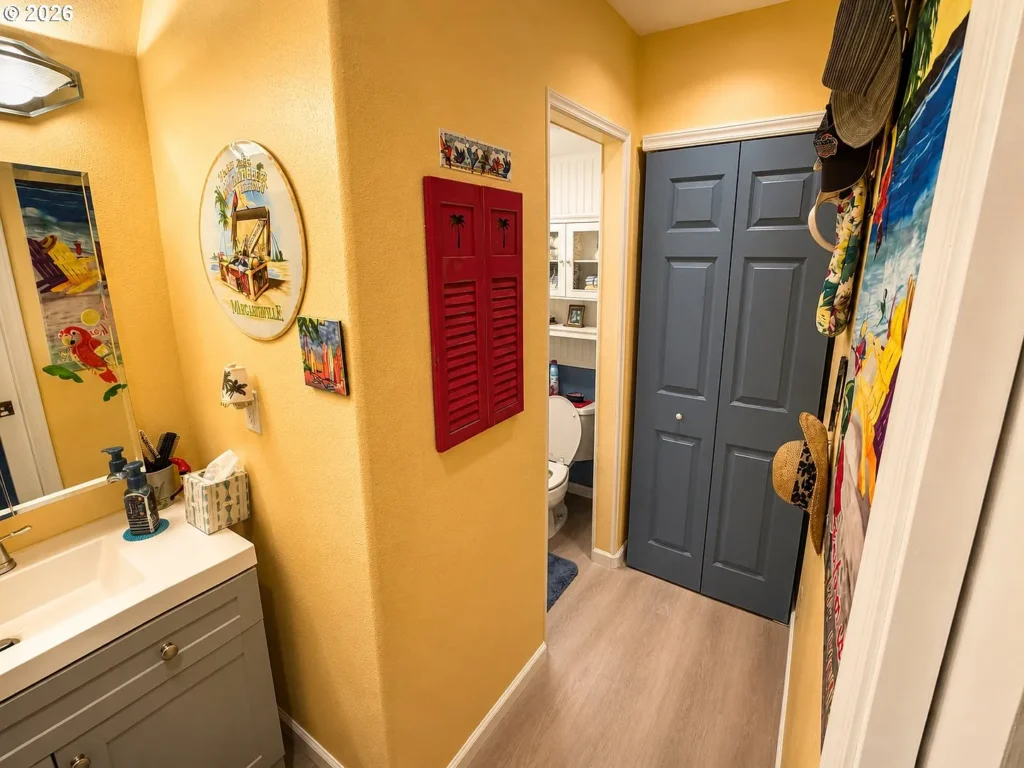
Moored at McCuddy’s Marine Drive Marina on the Columbia River, Unit A16 is a 1940 floating cabin whose appeal comes from its simplicity and unusually close relationship with the water. The one-bedroom home contains 720 square feet arranged on a single level, with wood siding and a metal roof giving it the informal character of an older river retreat. Its scale is modest, but the constantly changing surroundings—passing boats, shifting light and open water—make the setting feel far larger than the interior measurements suggest.
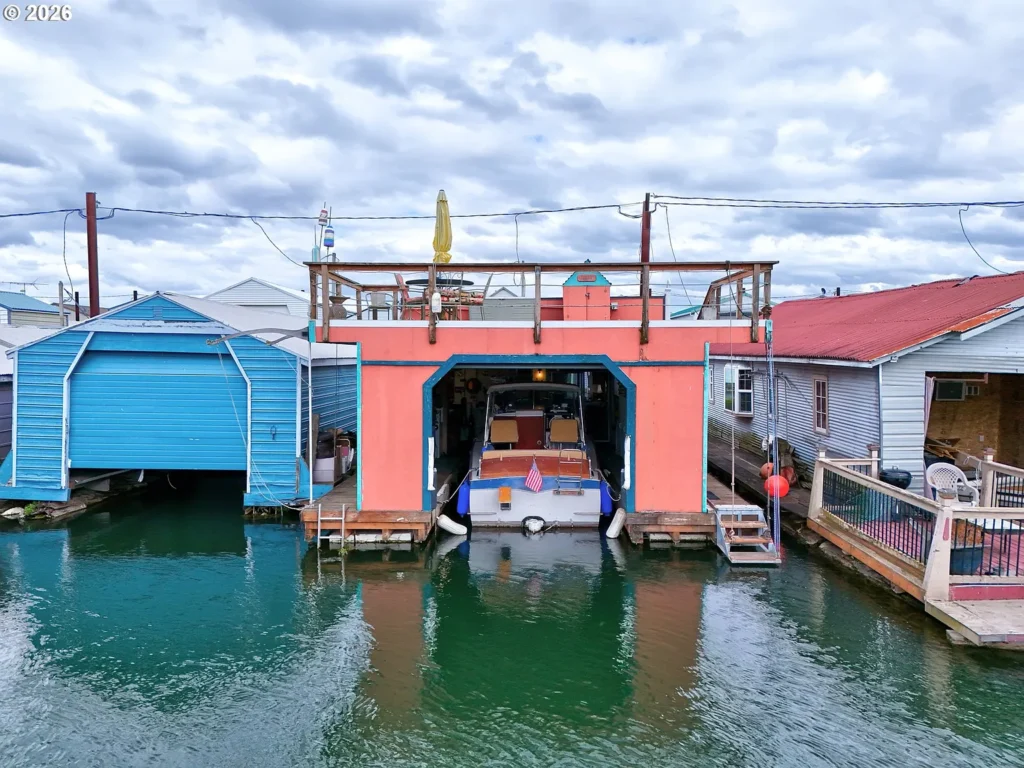
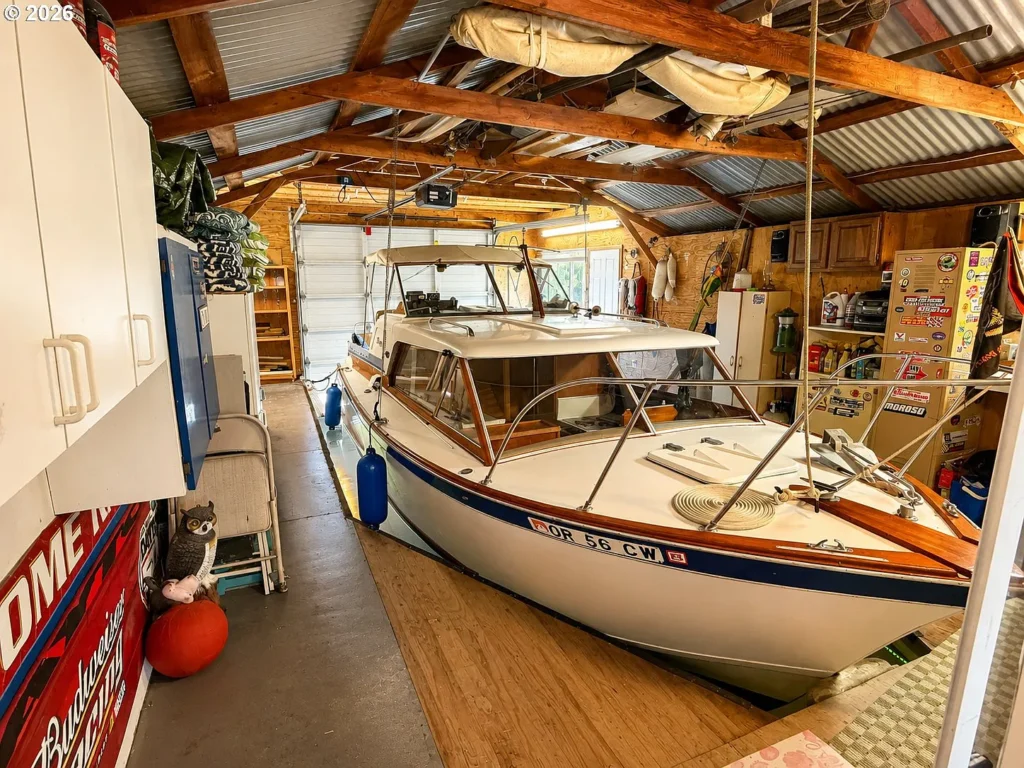
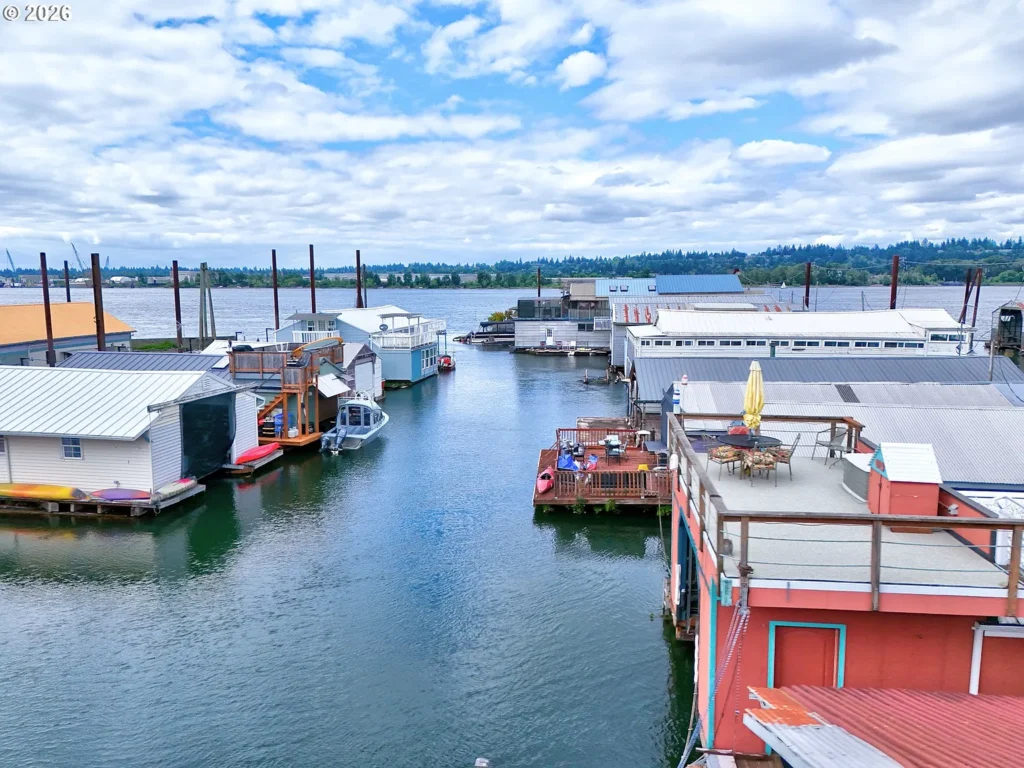
A 26-foot private boatwell is integrated directly beside the home, making this more than a house with a river view. It is a practical base for boating and exploring the Columbia. Above the main living level, a spacious rooftop deck provides panoramic views in both directions along the river, with Portland’s skyline and Mount Hood visible in the distance on clear days.
The home forms part of McCuddy’s gated Marine Drive moorage, positioned between Interstate 5 and Interstate 205 and approximately twenty minutes from downtown Portland. The marina’s docks, boating facilities and nearby floating restaurant, The Deck, give the community an atmosphere that feels connected without becoming overly busy. Compact, functional and full of personality, A16 offers a version of Portland living shaped less by square footage and more by direct access to the river.
History
Unit A16 does not have the tidy paper trail normally associated with a house permanently attached to one parcel of land. Current real estate records date the floating home to 1940, but they do not identify its builder, original owner or first moorage. Because floating homes can be relocated from one dock to another, the present address cannot automatically be treated as its original location. Portland’s floating-structure permitting guidance is a useful starting point for checking alterations. A buyer should also review the moorage agreement and obtain a specialist assessment of the float, utility connections and boat well. What is certain is that the structure predates McCuddy’s establishment at this section of Marine Drive.
The 1940 construction date places A16 within an important period in the development of Portland’s floating-home culture. Earlier river dwellings in the Pacific Northwest were often practical structures built for fishermen, loggers and other people whose work depended on the Columbia and Willamette Rivers. Many were small wooden cabins supported by heavy log floats, with low rooflines and straightforward interiors. By the middle of the 20th century, these working shelters were gradually becoming permanent residences and recreational retreats.
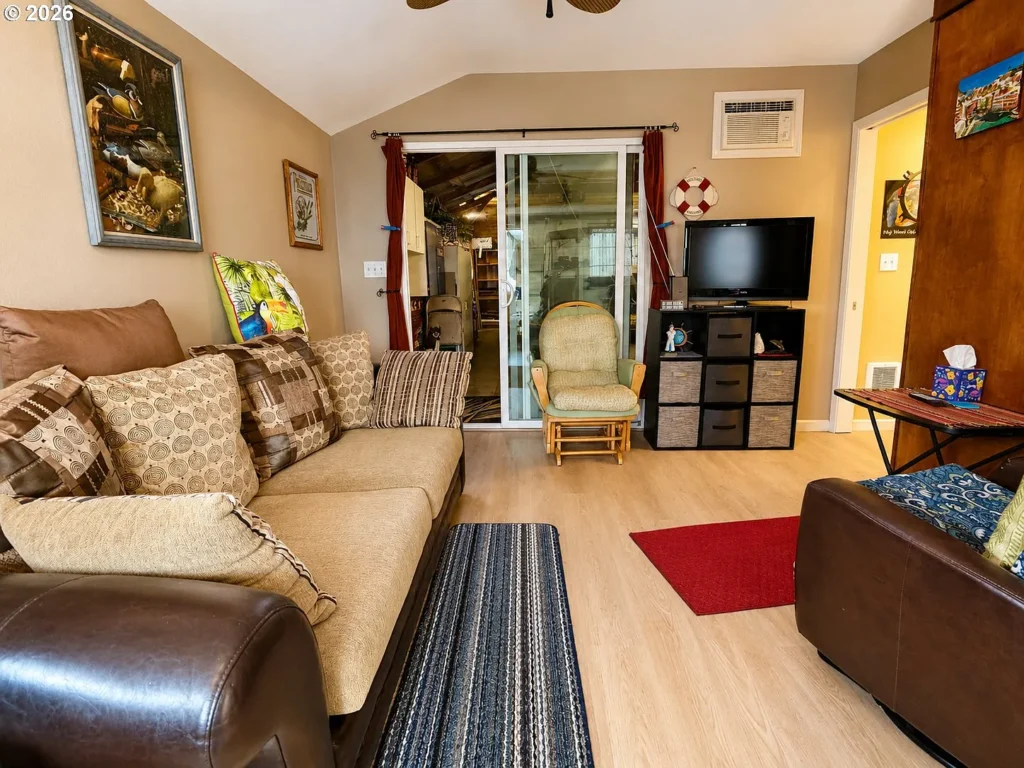
A16’s compact one-story form, wood siding and 720-square-foot interior belong to that older tradition of unpretentious river housing. There is no evidence proving that this particular cabin was built for a fisherman or logger, but its size and construction reflect the practical approach common to Portland’s early floating homes.
The shoreline where it is now moored has a history of its own. Lee McCuddy began his marine business near Portland’s Morrison Bridge around 1930, initially building the company around the regional distribution of Evinrude outboard motors. In 1947, he purchased property at Northeast 33rd Avenue and Marine Drive. The site had previously served as a ferry terminal carrying workers from the Vanport community across the Columbia River to the Kaiser Shipyards in Vancouver.
McCuddy opened a Columbia River retail store there in 1947. During the 1970s, the business gradually shifted from selling boats and marine equipment toward developing and operating marinas. By 1975, the location was established as McCuddy’s Yacht Harbor, forming the basis of the present Marine Drive moorage. Available records do not reveal when A16 arrived at this dock, so it may have occupied another location earlier in its life.
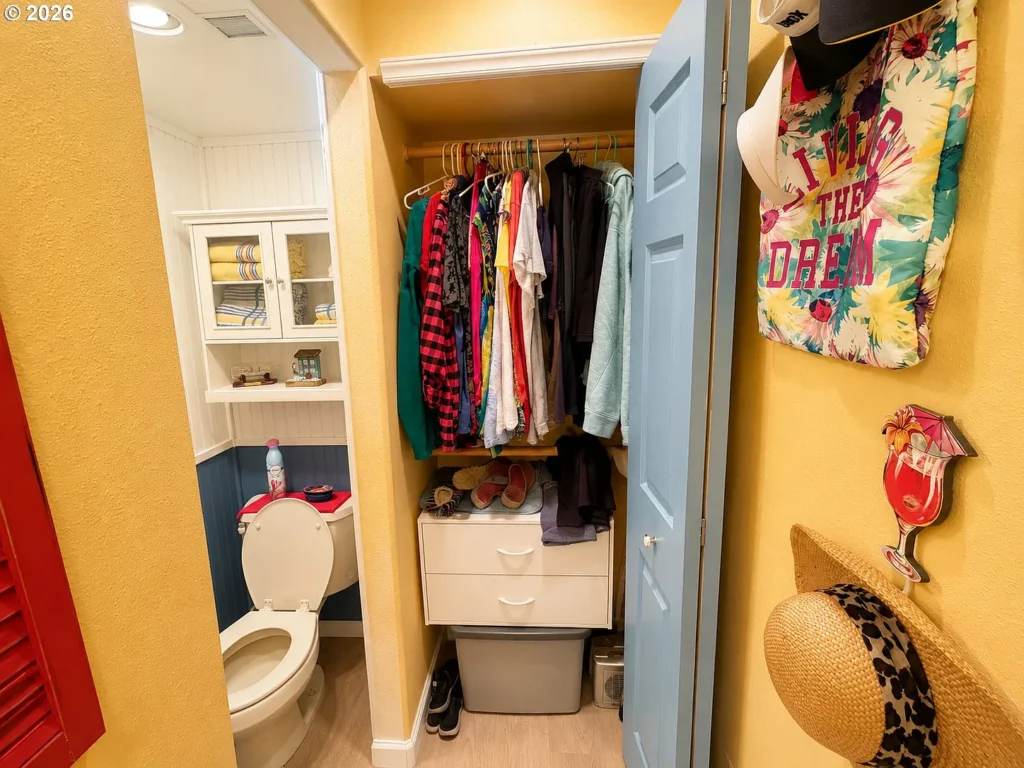
Like many floating homes that have remained in use for generations, A16 has been adapted rather than preserved as a museum piece. Its metal roof, updated flooring, wall-mounted cooling, rooftop deck and 26-foot boatwell reflect practical changes made for later occupants, although published records do not provide dates for those additions.
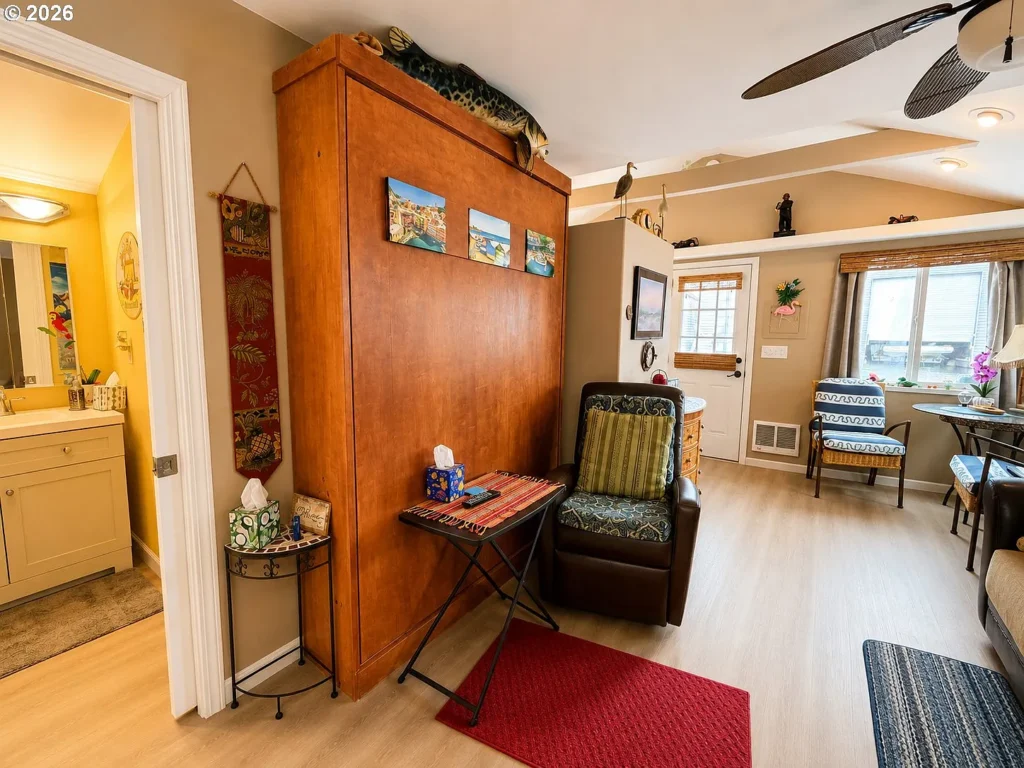
Its historical interest therefore lies less in a famous owner or architect than in its survival. More than eight decades after it was built, A16 continues to serve the same essential purpose as Portland’s early river cabins: providing a small, functional home with the Columbia River immediately outside the door.
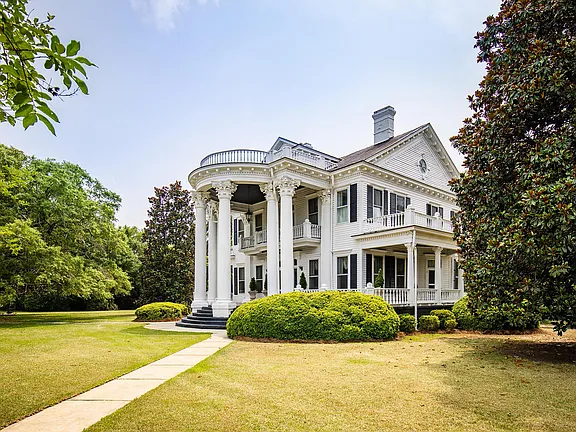
Glen Eberly: An 1895 Beaux-Arts Home in Mayesville, SC
Buying a Historic Home: Inspections, Restrictions, Costs, and Research
American Historic House Styles: A Practical Guide
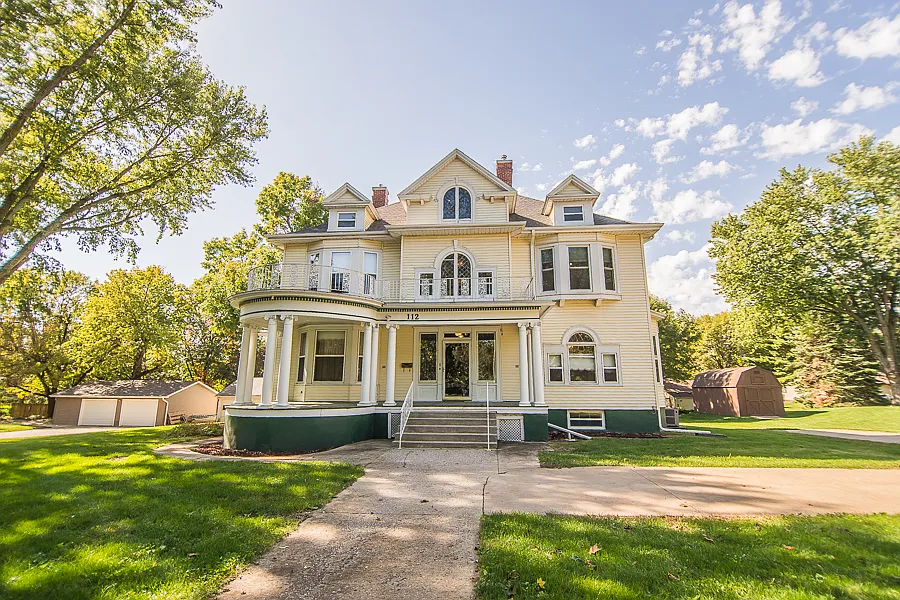
The 1880 Victorian Home at 112 N 3rd Ave, Villisca, Iowa
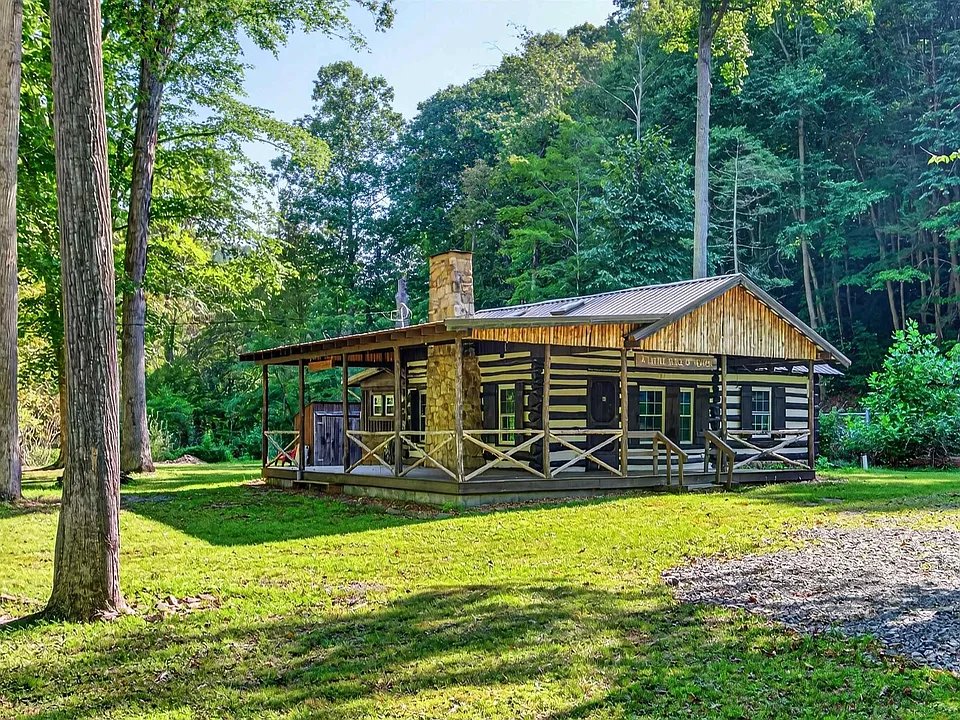
The 1920 Wolf Creek Cabin in Virginia