property details
Address – 77 W Chestnut Street, Kingston, NY 12401
Built in – circa 1895–1896; Brownstoner’s archival research cites a March 1895 newspaper account of plans for the house, while listing material uses circa 1896
Beds – 3
Baths – 3
Introduction
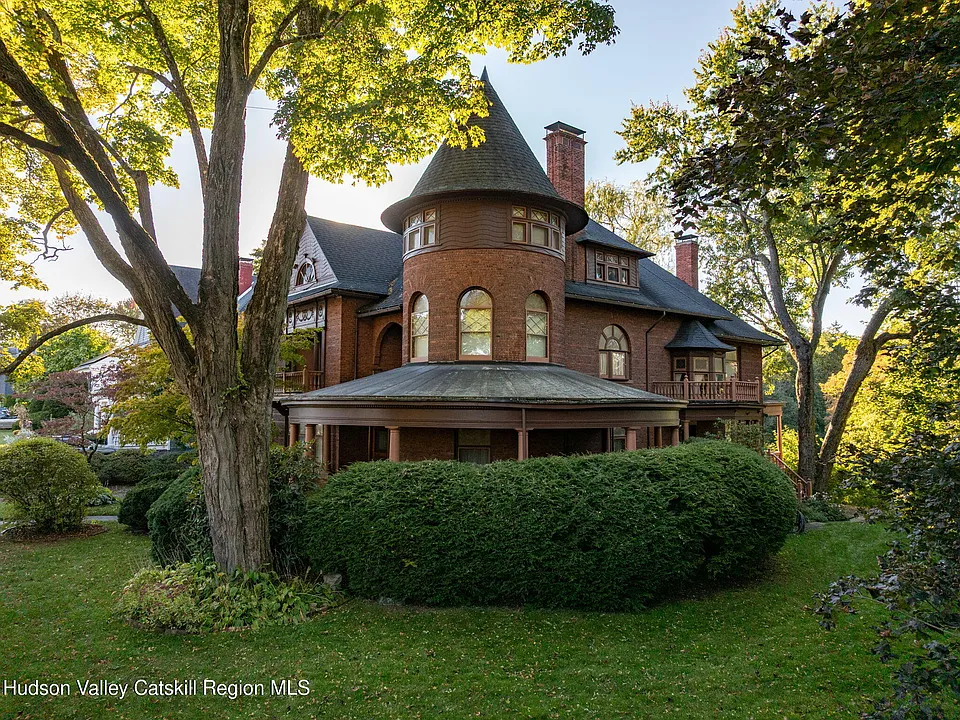
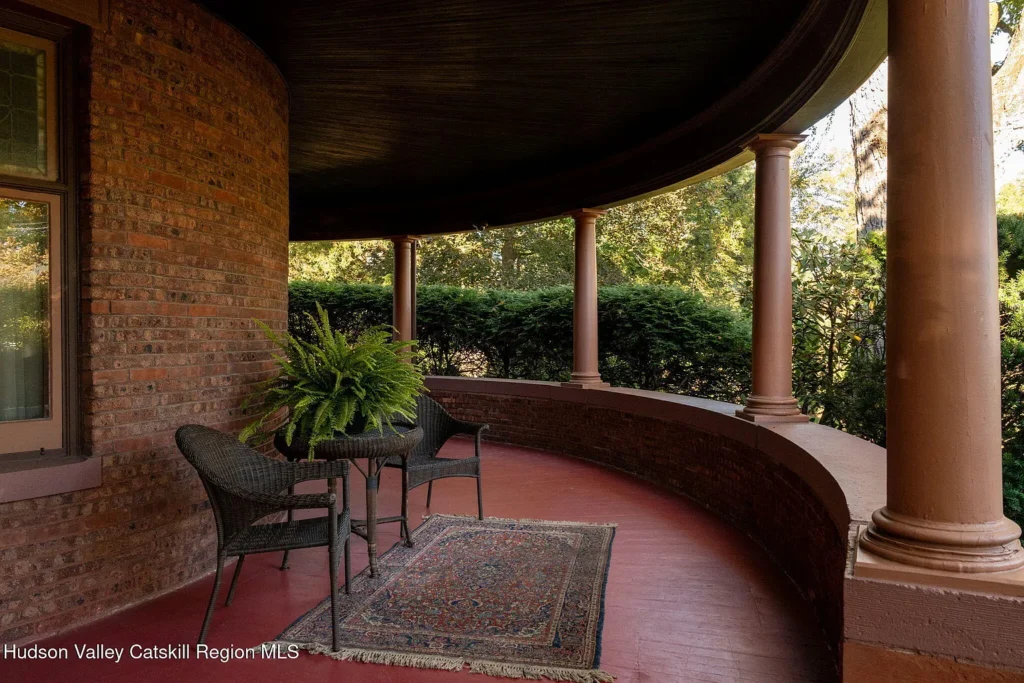
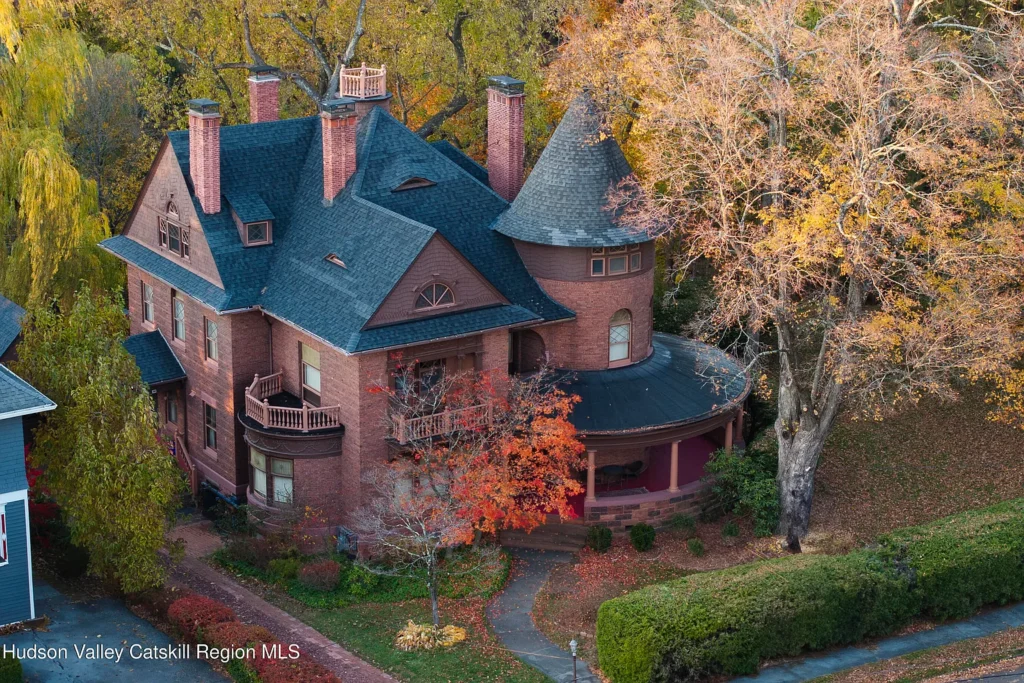
High above Kingston’s Rondout Waterfront, the Coykendall House is the sort of building that makes you stop before you have even reached the front door. Rose-colored brick, pale sandstone trim and a tall round turret give the c.1896 Queen Anne residence a presence that is formal without feeling forbidding. From its elevated double lot, the grounds look across the historic waterfront toward the distant Catskill Mountains.
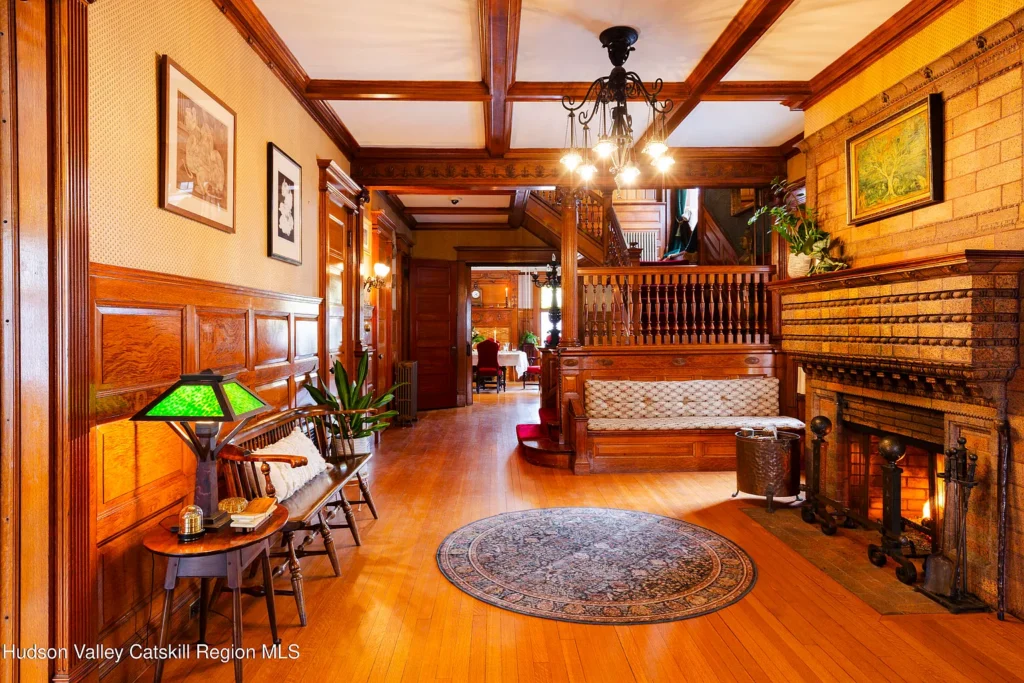
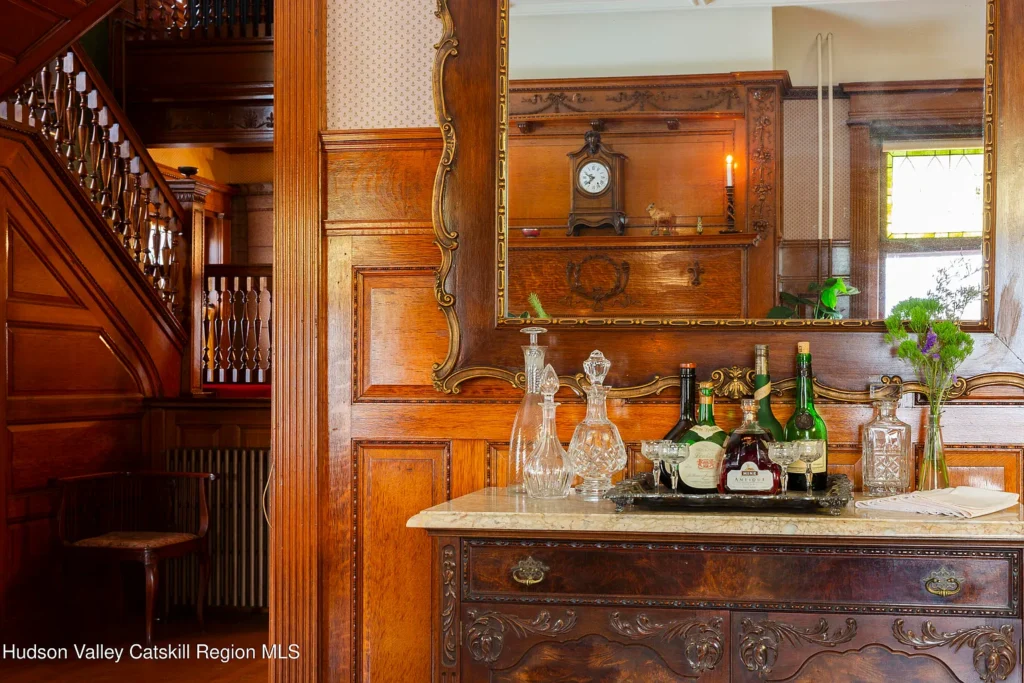
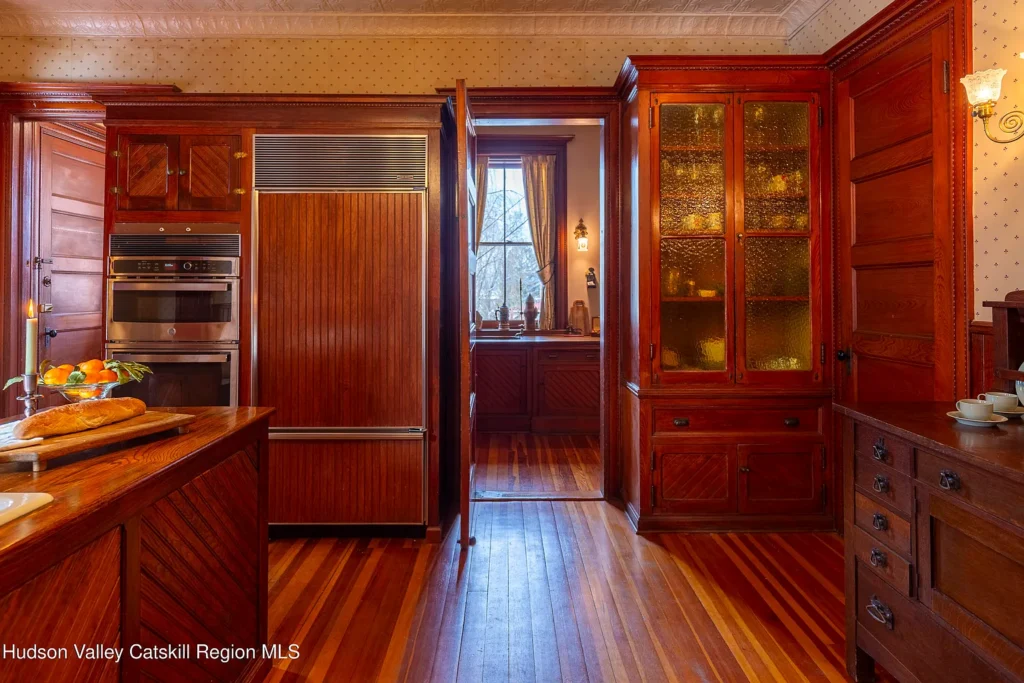
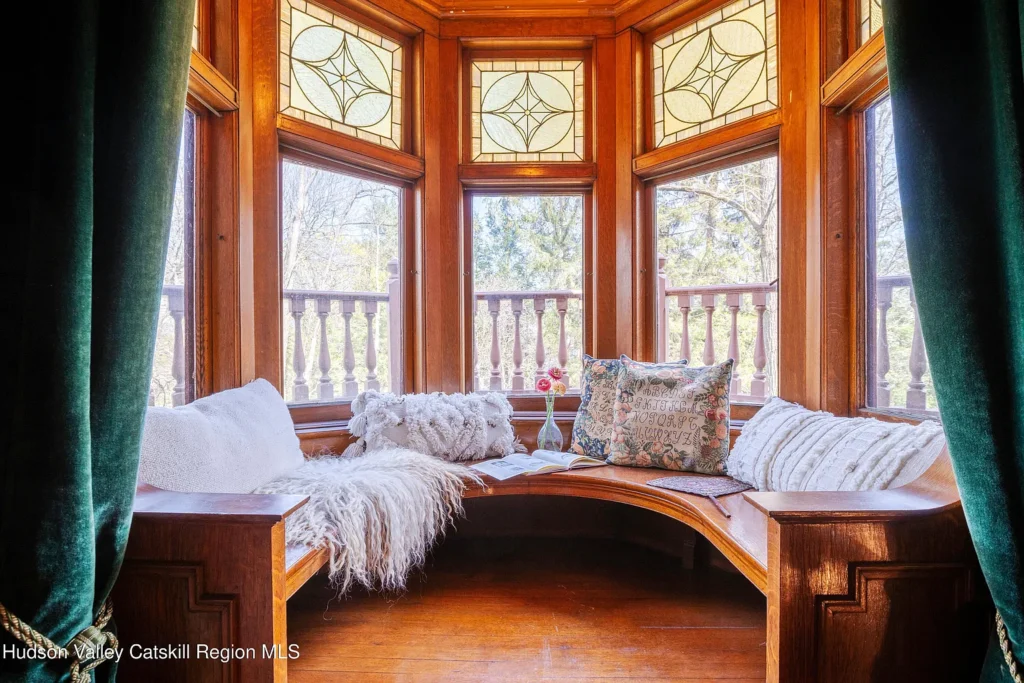
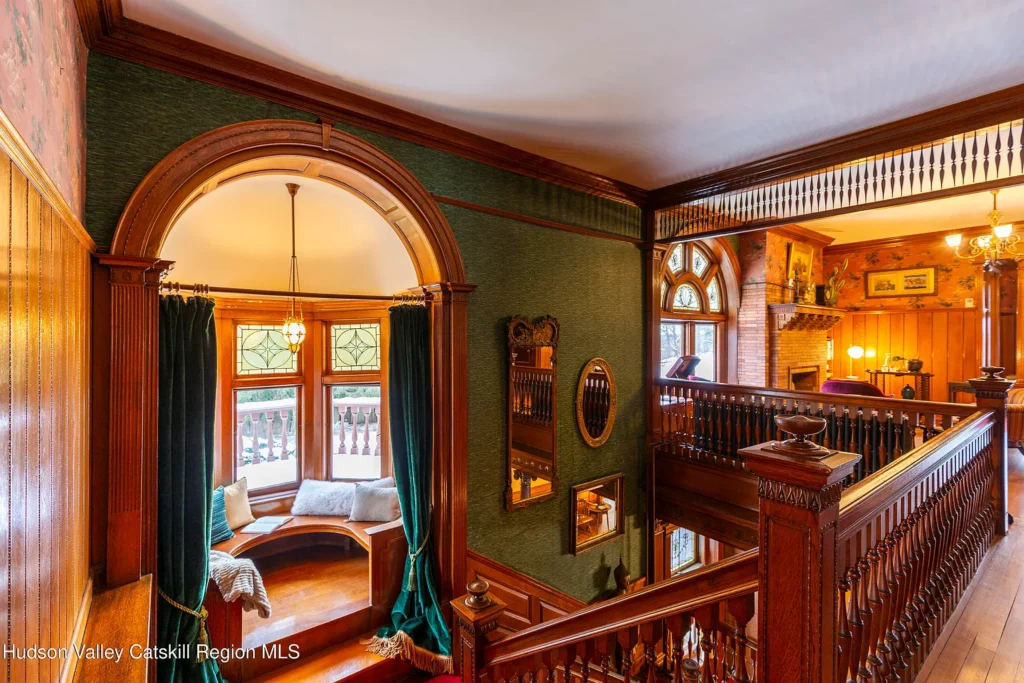
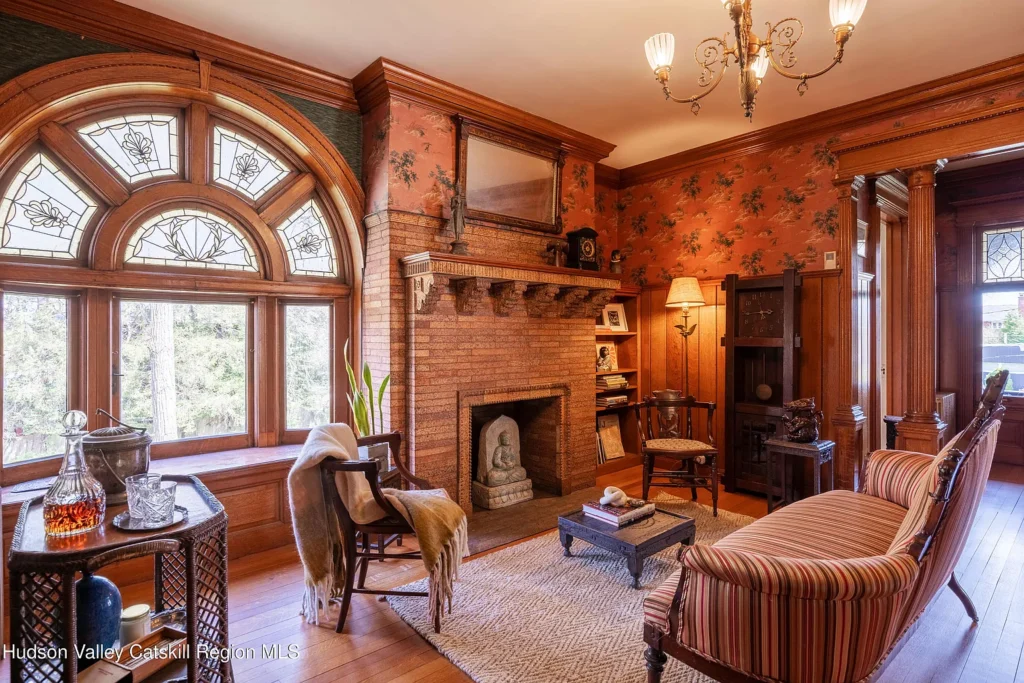
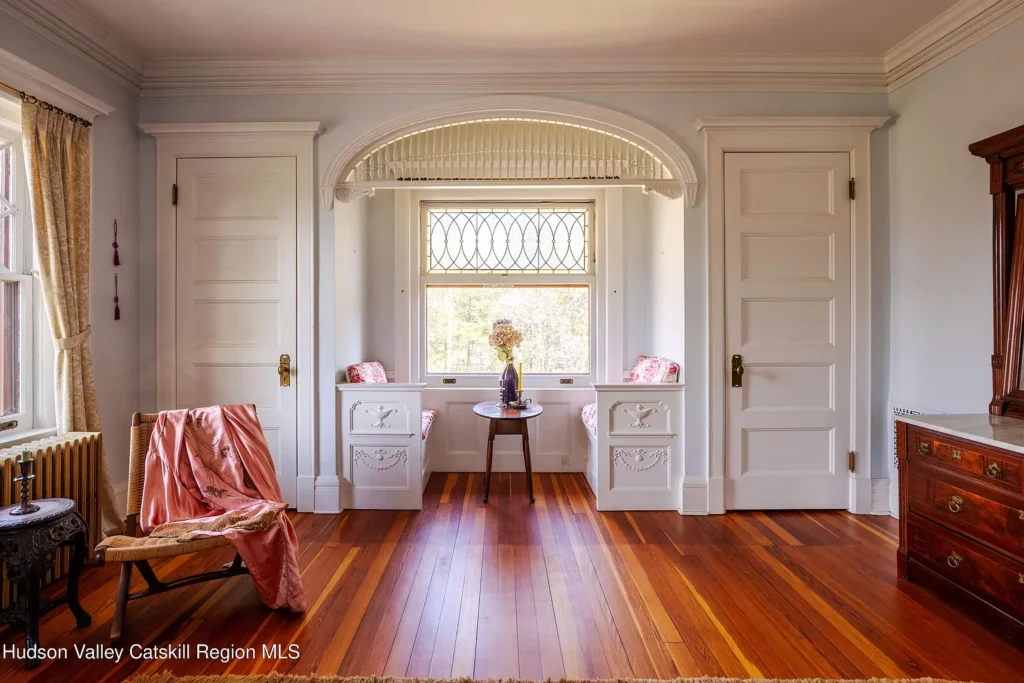
It is a large house, measuring approximately 5,424 square feet, but the interior does not feel cold or oversized. Sunlight passes through curved windows and more than two dozen stained-glass transoms, throwing changing colors across the original ash floors. Nine-foot oak pocket doors still divide the principal rooms, while carved woodwork, paneled walls, tin ceilings and old plaster finishes preserve much of the character George and Emma Coykendall would have known.
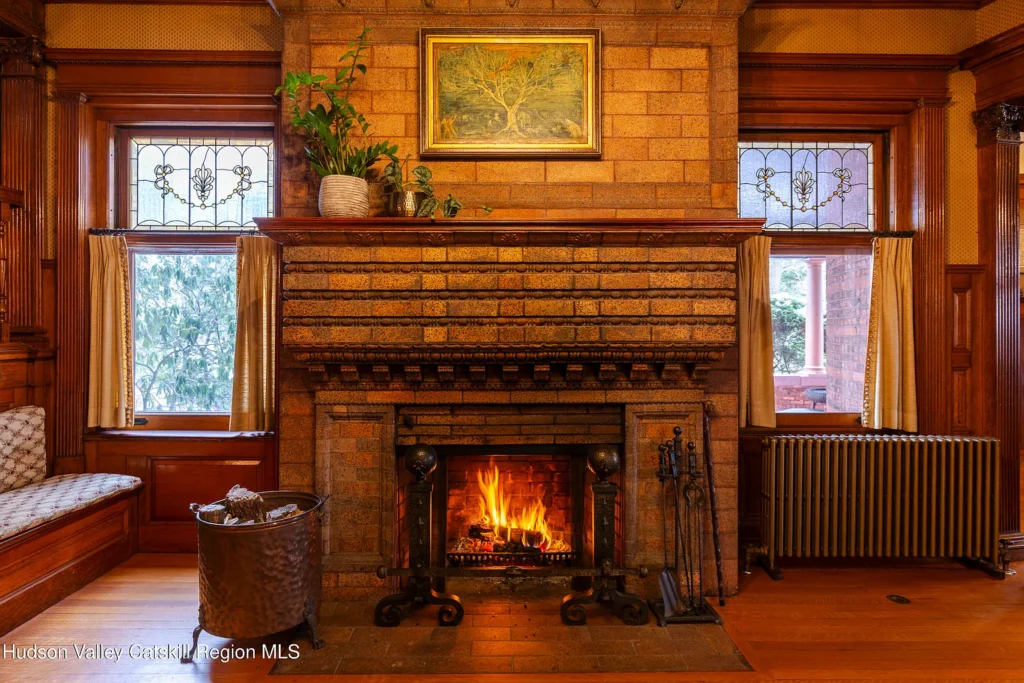
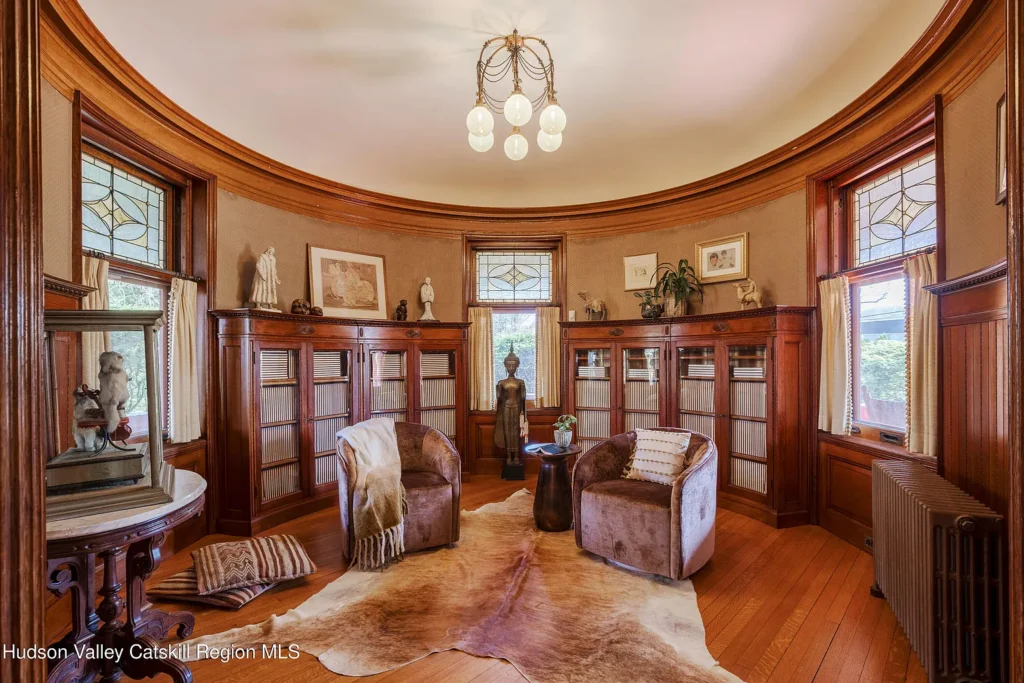
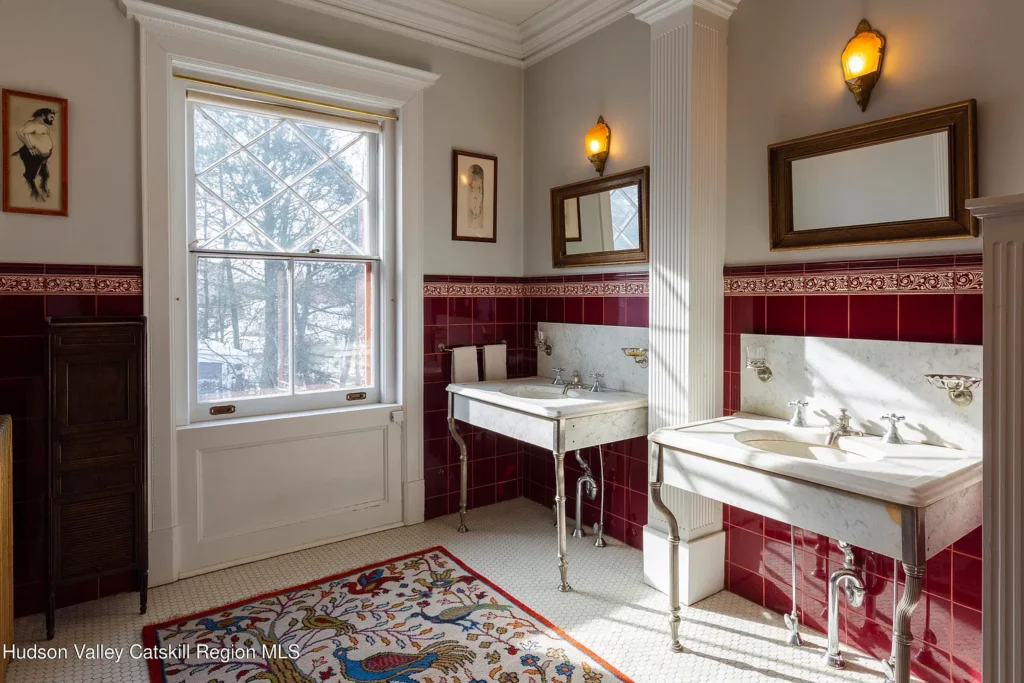
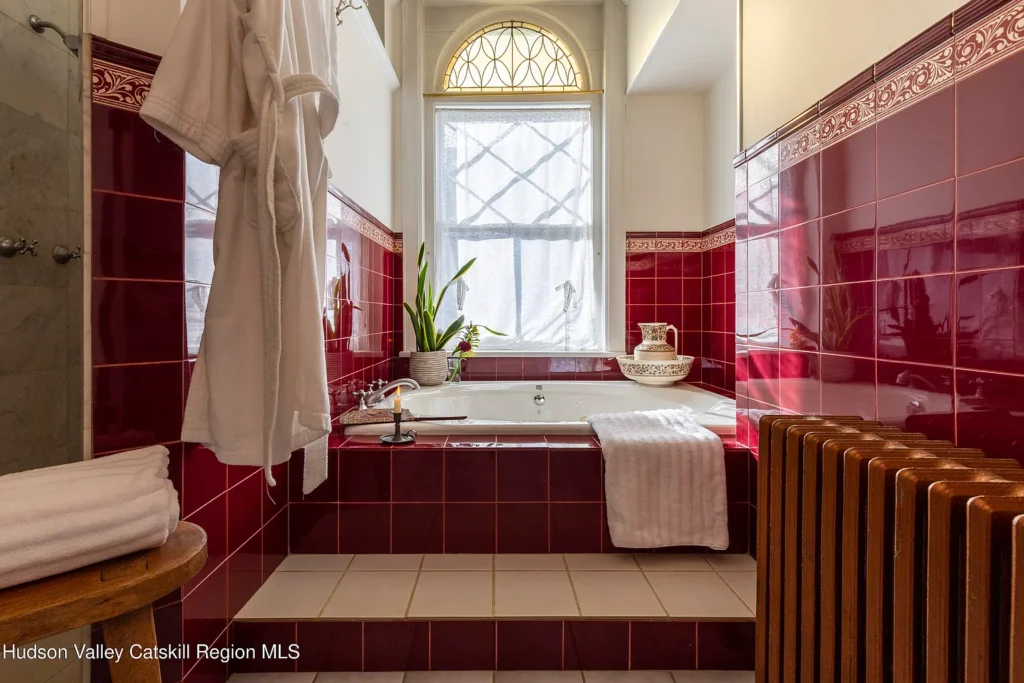
The full-width dining room is one of the most memorable spaces in the house, with oak paneling and a fireplace surrounded by handmade butterscotch-colored tiles. Upstairs, the turret becomes a circular bedroom, while the primary suite stretches across the width of the home. Later owners introduced updated mechanical systems, a modernized bathroom, a whole-house generator and a new roof without stripping away the original materials.
Outside, mature gardens, a gazebo and a winding path soften the formality of the brick exterior. A newer detached garage was designed to echo the materials and proportions of the main residence. After being held by the same stewards for approximately forty years, the three-bedroom house returned to the market in 2026 and ultimately sold for $1.8 million.
history
The Coykendall House was constructed around 1896 for George and Emma Coykendall during one of the most prosperous periods in Kingston’s history. At the time, the Rondout waterfront was busy with rail traffic, manufacturing, shipping and commercial activity along the Hudson River. Families whose fortunes were connected to those industries built substantial residences on West Chestnut Street, safely above the noise of the waterfront but close enough to overlook it.
Before moving here, George Coykendall lived at 15 West Chestnut Street. A historic walking guide produced by Friends of Historic Kingston records that he moved into the new house at number 77 around 1897. George was then president of the Stony Clove Railroad, a line serving communities and resorts in the Catskill Mountains. His position placed him within a family whose influence extended across the region’s railroads, steamboats and other transportation interests.
Almost directly across the street stood the still larger residence of George’s brother Samuel Decker Coykendall, his wife Mary and their children. Samuel eventually became one of Kingston’s most powerful businessmen, with interests that included the Ulster & Delaware Railroad and the Cornell Steamboat Company. His mansion no longer survives, making George and Emma’s house an especially valuable reminder of the family’s presence on West Chestnut Street.
The identity of the Coykendall House’s architect has not been firmly documented, but the workmanship reflects the money and care invested in its construction. The red brick was laid in English bond and contrasted with different-colored masonry, sandstone trim and patterned shingles. A round corner tower, conical roof and wraparound porch placed the house firmly within the Queen Anne tradition popular during the closing years of the nineteenth century.
Two small features near the street provide a more intimate connection to the house’s early years. The carriage stone beside the driveway is believed to remain in its original position, once helping passengers step into horse-drawn vehicles. The old iron post near the curb is thought to be Kingston’s only surviving gas street-lamp post.
The surrounding Chestnut Street Historic District was added to the National Register of Historic Places in 1985 and later received local historic-district protection. The district preserves the hillside neighborhood where many of nineteenth-century Rondout’s successful merchants, manufacturers and transportation figures made their homes. Among those residences, the Coykendall House remains one of the clearest surviving links between Kingston’s domestic architecture and the industrial wealth that once moved through the city’s waterfront.
Architecture & Design
The Coykendall House is a confident example of late-nineteenth-century Queen Anne architecture. Its exterior is built from rose-toned brick laid in English bond, with contrasting masonry and sandstone used to bring depth to the façade. The round corner tower, conical roof, layered gables and broad wraparound porch give the house its distinctive silhouette. Patterned shingles arranged in a serpentine design fill the gables, while a garland-decorated frieze adds a quieter ornamental touch above the semicircular side bay.
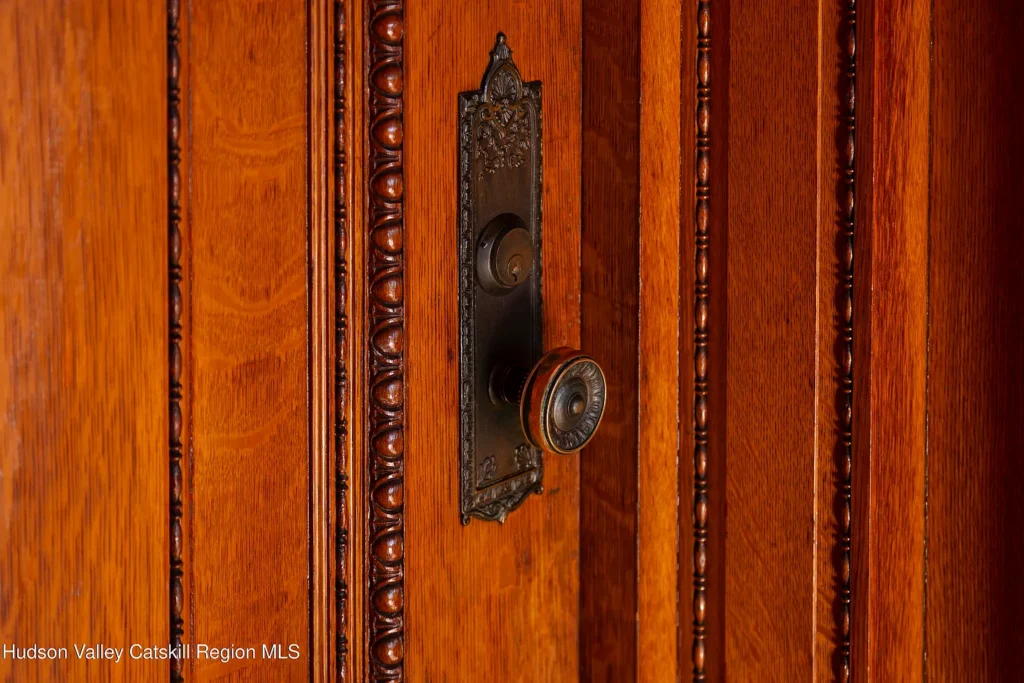
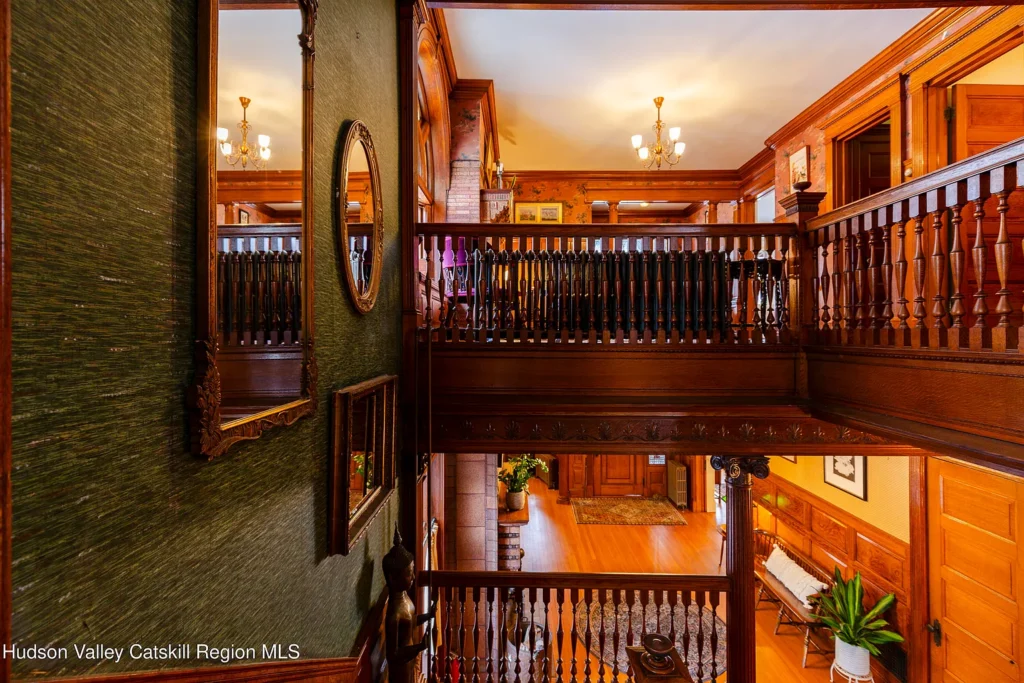
Inside, the design is grand without becoming stiff. A sweeping staircase organizes the central hall, leading past stained-glass panels to an upper reading alcove. The principal rooms retain ash flooring, oak paneling, carved millwork, tin ceilings and hand-finished plaster walls. More than two dozen stained-glass transoms introduce shifting color throughout the day, while original nine-foot oak pocket doors allow rooms to be opened for entertaining or closed for privacy.
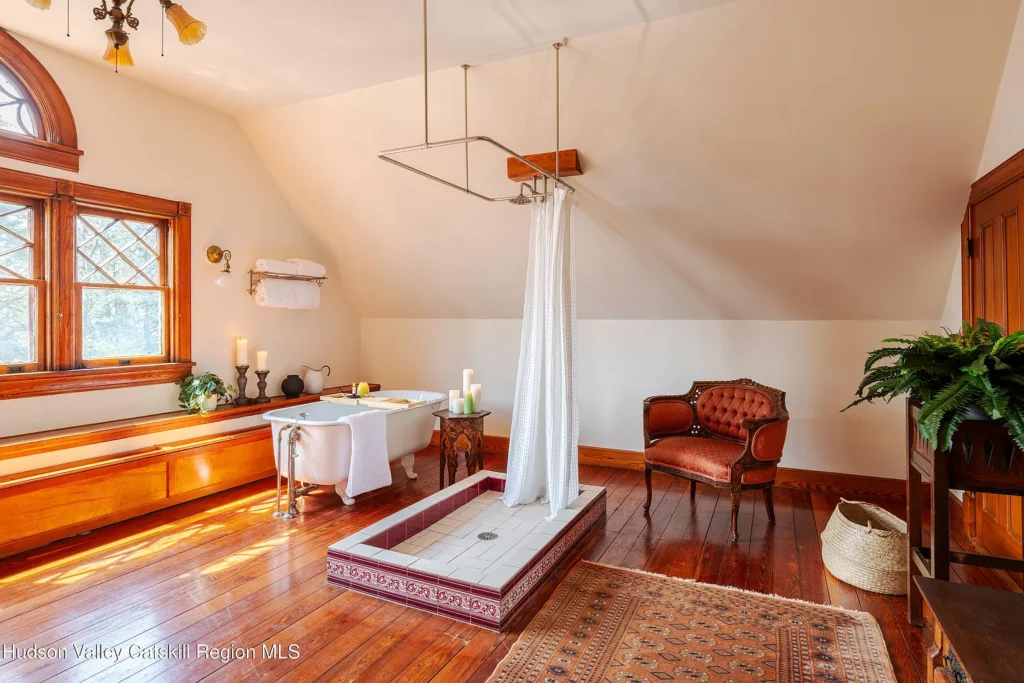
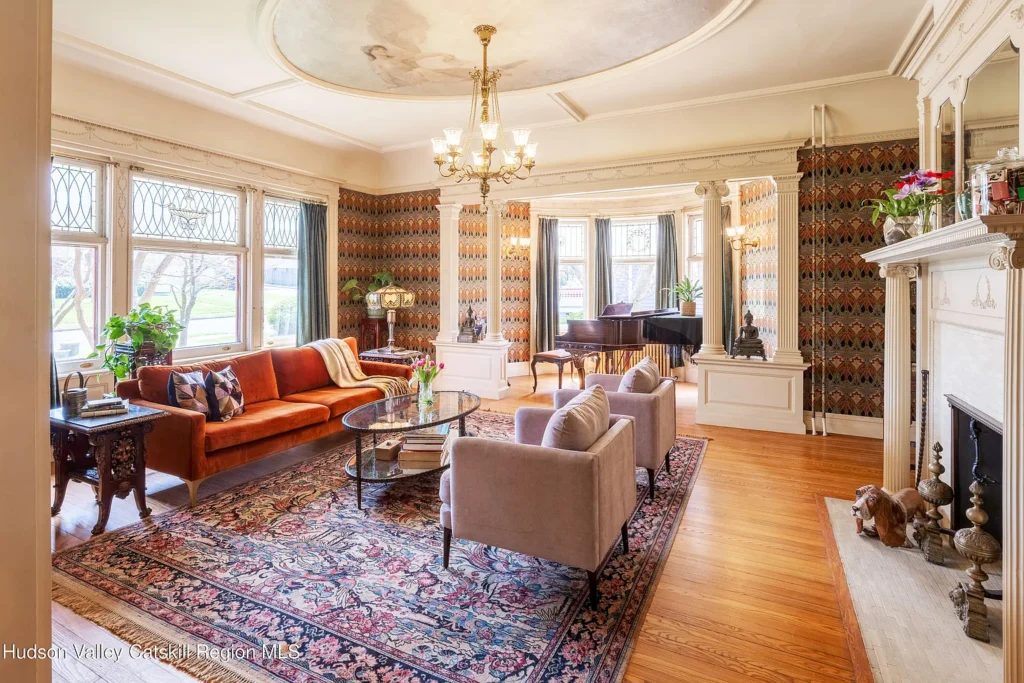
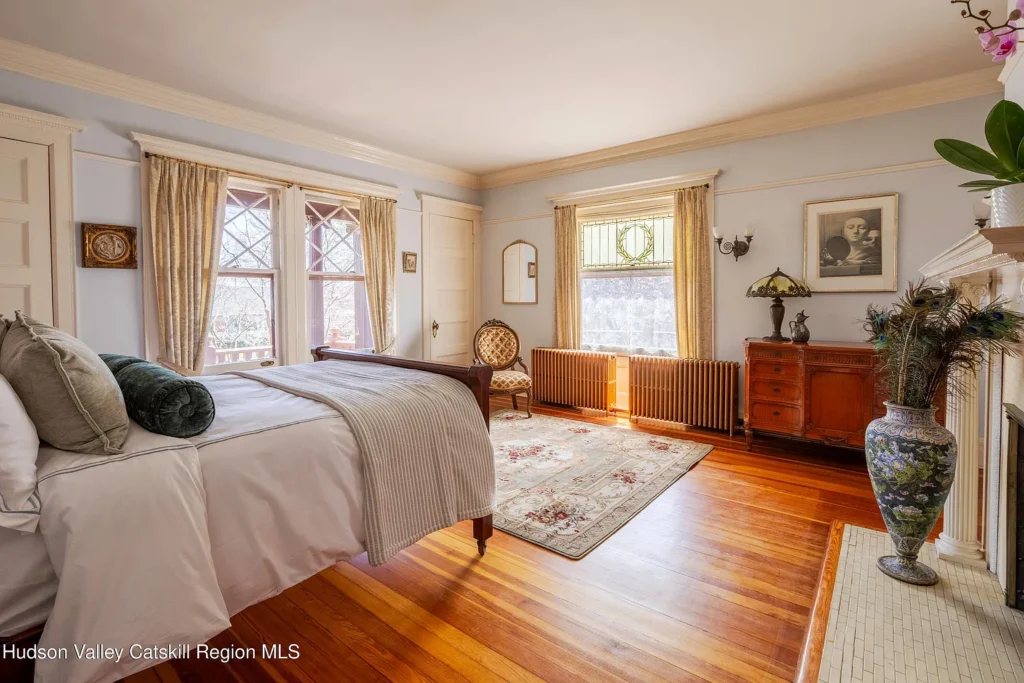
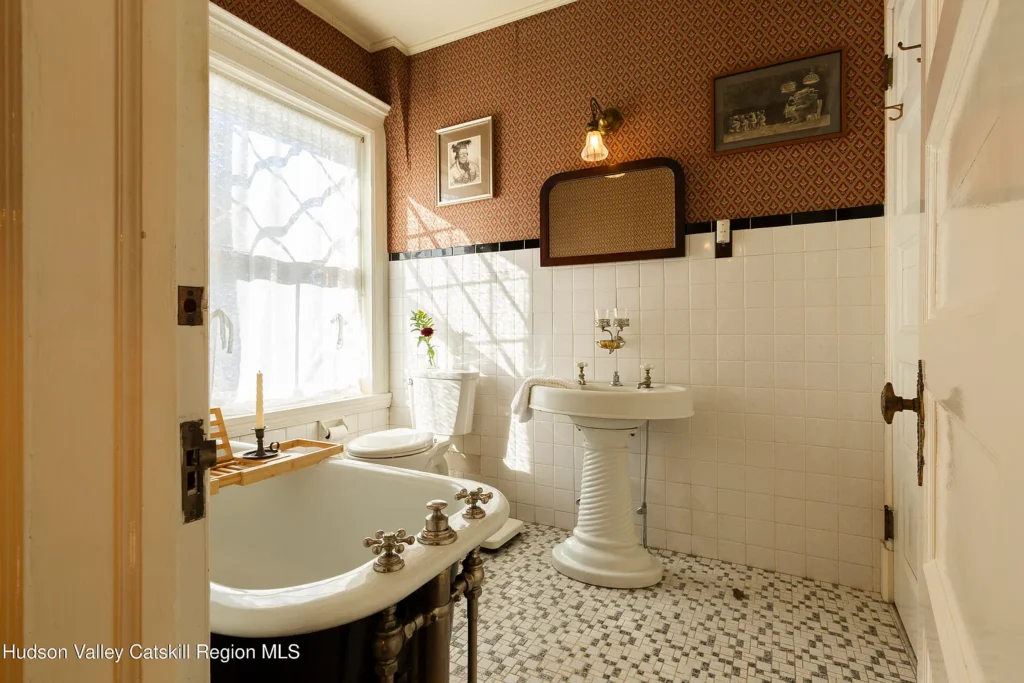
The curved window wall in the parlor follows the shape of the tower and softens the room’s geometry. Across the hall, the full-width dining room is anchored by a fireplace surrounded with handmade butterscotch-colored tiles. Upstairs, the primary suite occupies an unusually generous portion of the floor, while a circular bedroom fits neatly inside the tower. Even the uppermost rooms respond to the original roofline, creating sloping ceilings and intimate spaces that feel entirely different from the formal rooms below. Modern bathrooms and mechanical systems have been added carefully, allowing the house to function comfortably without erasing the materials and craftsmanship that define it.
Location & Lifestyle
Set in Kingston’s historic Chestnut Street neighborhood, the Coykendall House enjoys a setting that feels closely connected to the city’s architectural past. The surrounding streets are lined with distinctive late-19th and early-20th-century homes, giving the area a character that complements the house itself. From the property, views toward the Catskill Mountains add a scenic backdrop that is especially striking beyond the city rooftops.
Kingston offers an appealing mix of history, culture, and everyday convenience. The city’s Uptown Stockade District is known for its historic streets, independent shops, restaurants, galleries, and local events, while the Rondout waterfront provides another side of Kingston’s character along the Hudson River. Beyond the city, the wider Hudson Valley and nearby Catskills offer hiking, scenic drives, small towns, farms, and year-round outdoor recreation. For a home of this age and architectural importance, the location feels particularly fitting—a historic residence surrounded by a region where old architecture and local history remain an important part of everyday life.
Related Homes
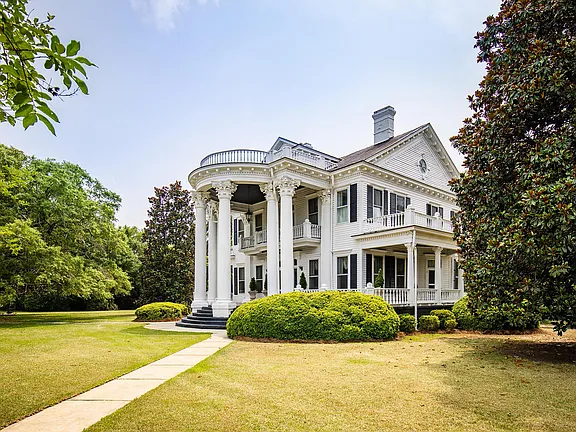
Glen Eberly: An 1895 Beaux-Arts Home in Mayesville, SC
Buying a Historic Home: Inspections, Restrictions, Costs, and Research
American Historic House Styles: A Practical Guide
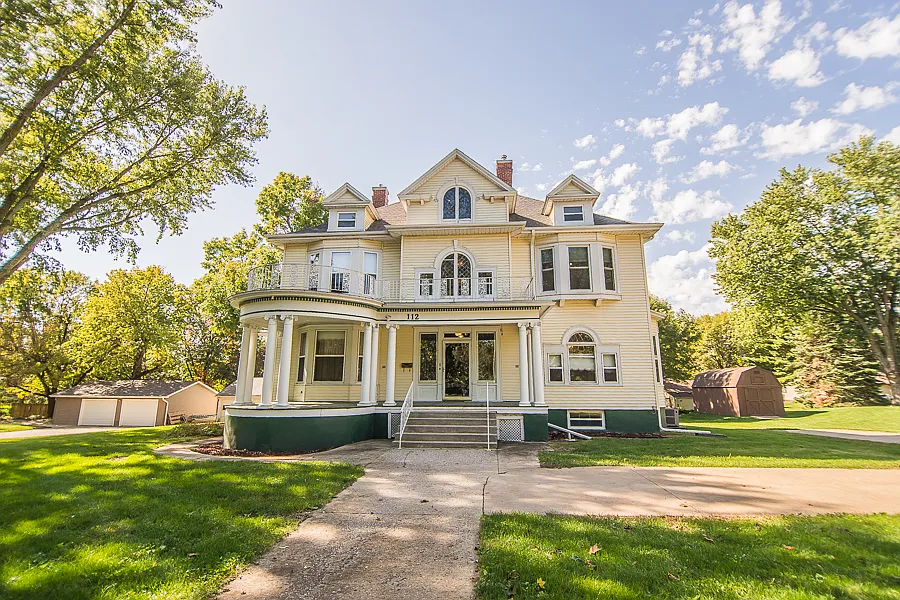
The 1880 Victorian Home at 112 N 3rd Ave, Villisca, Iowa
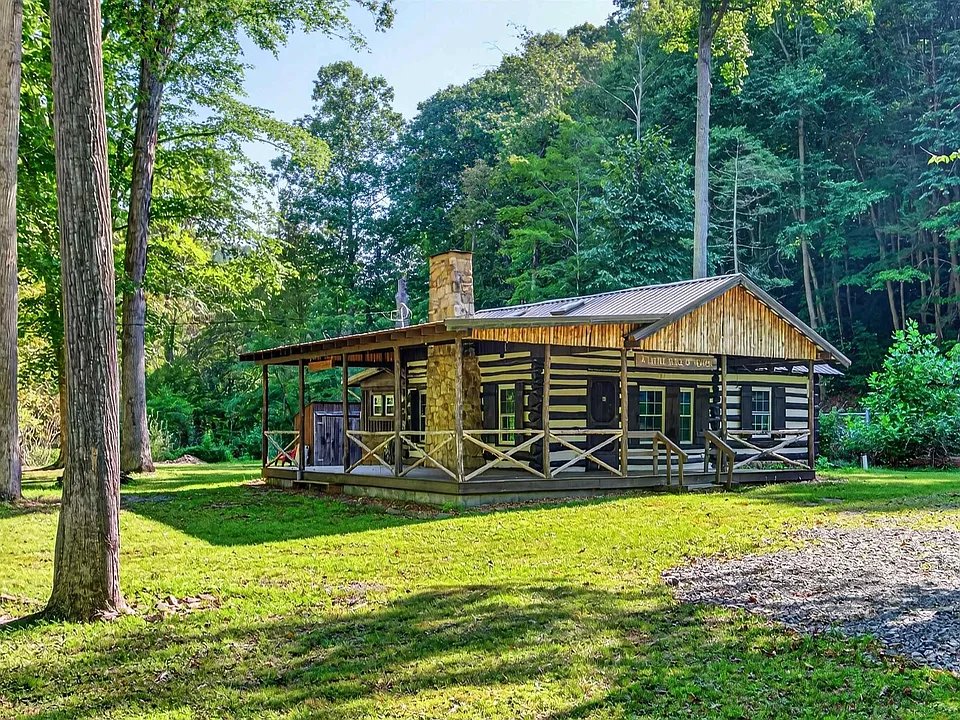
The 1920 Wolf Creek Cabin in Virginia
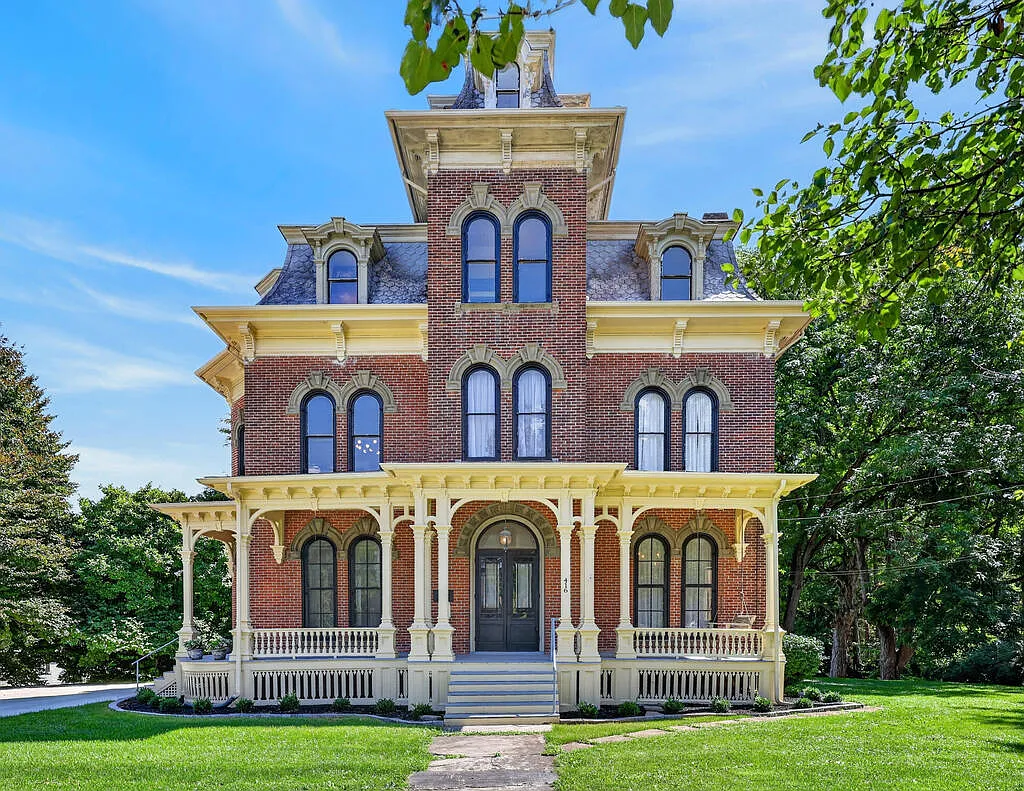
The 1869 Charles Sawyer House in Waverly, NY
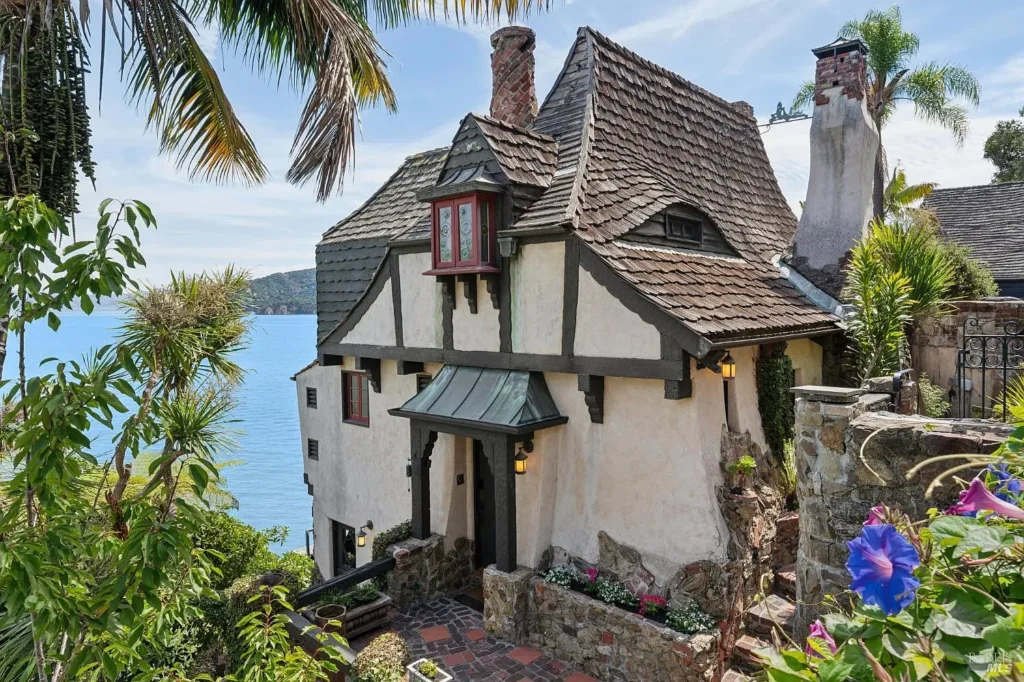
The 1942 Heidelberg Storybook House in Belvedere, CA
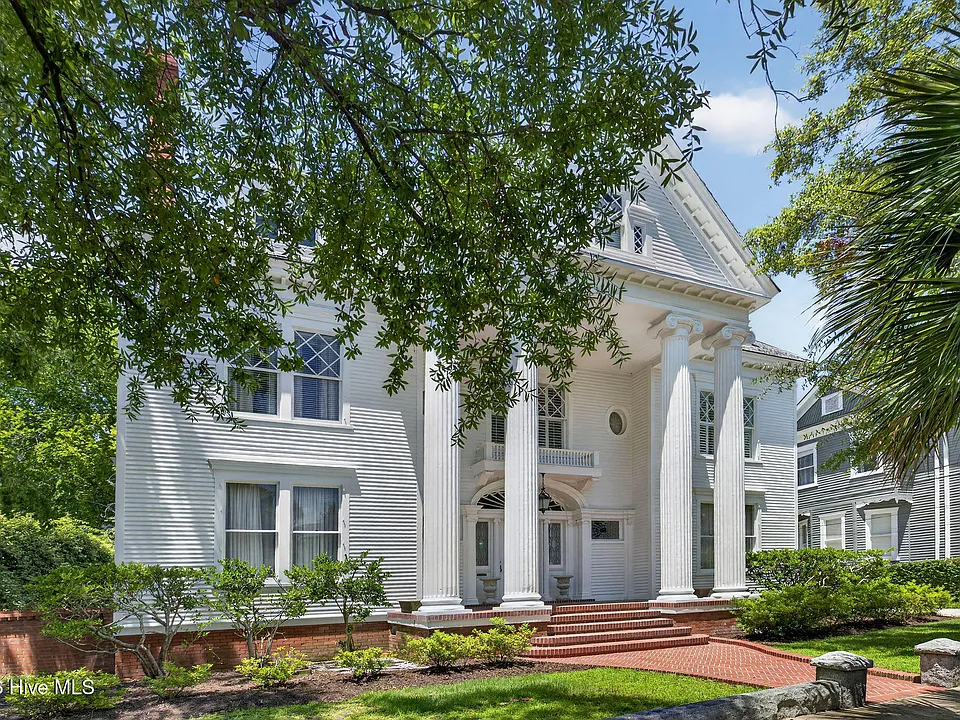
The 1900 William Dick House in Wilmington, NC
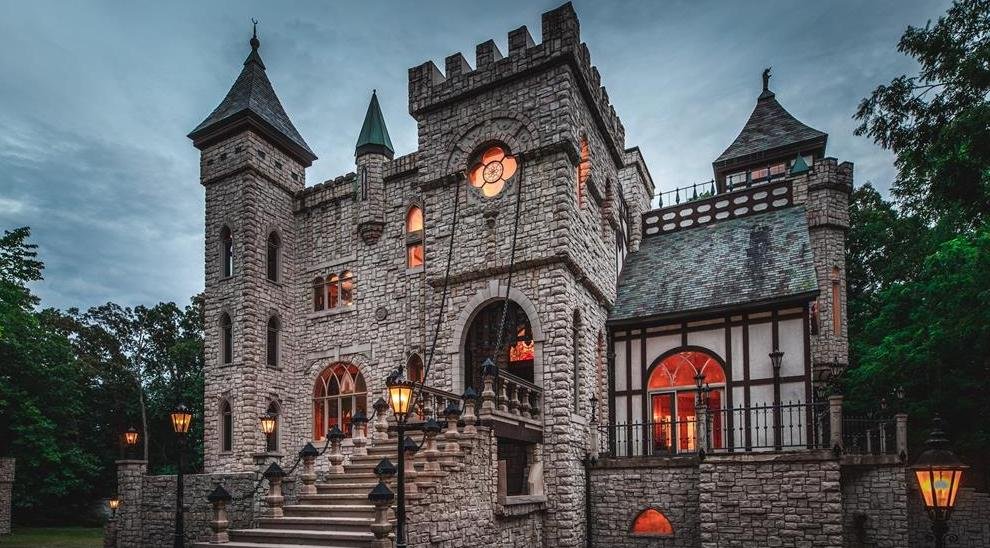
A 1990 Medieval-Inspired Castle at 2009 Victoria Hill, Michigan
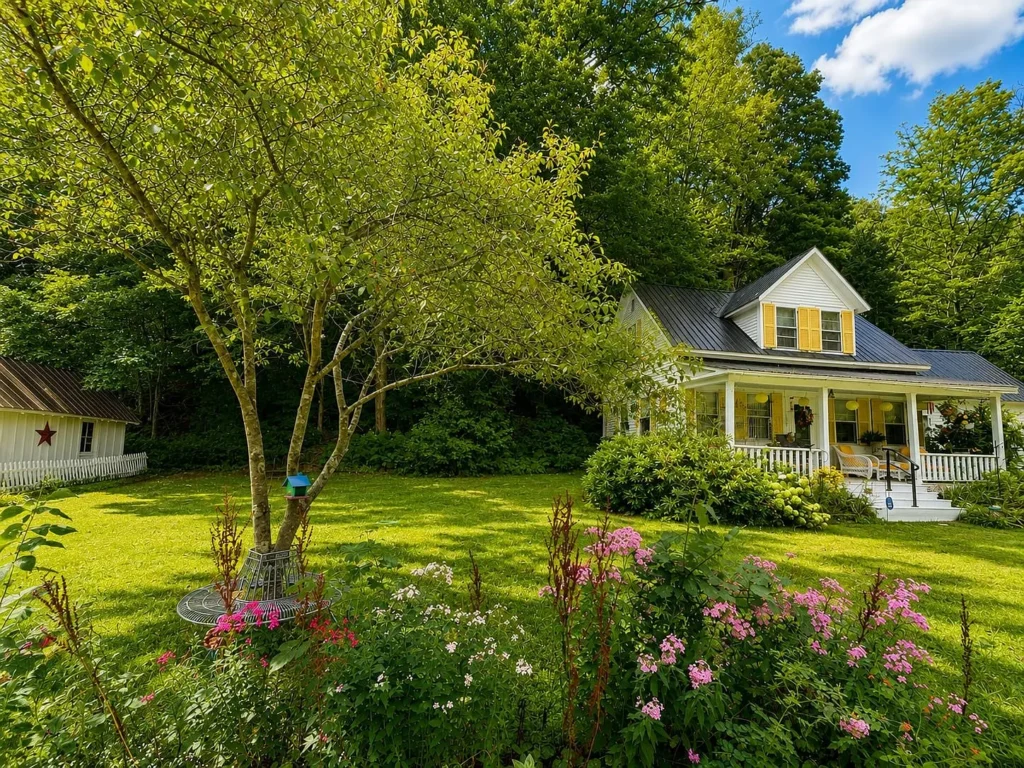
A Charming 1930 Vermont Home on the Rock River
The 1878 Chancellor House in Parkersburg, West Virginia
A 1960 Wright-Inspired Ranch in Green Bay
The c.1798 John M. Parsons House: A Restored Waterfront Treasure on Westport Island, Maine